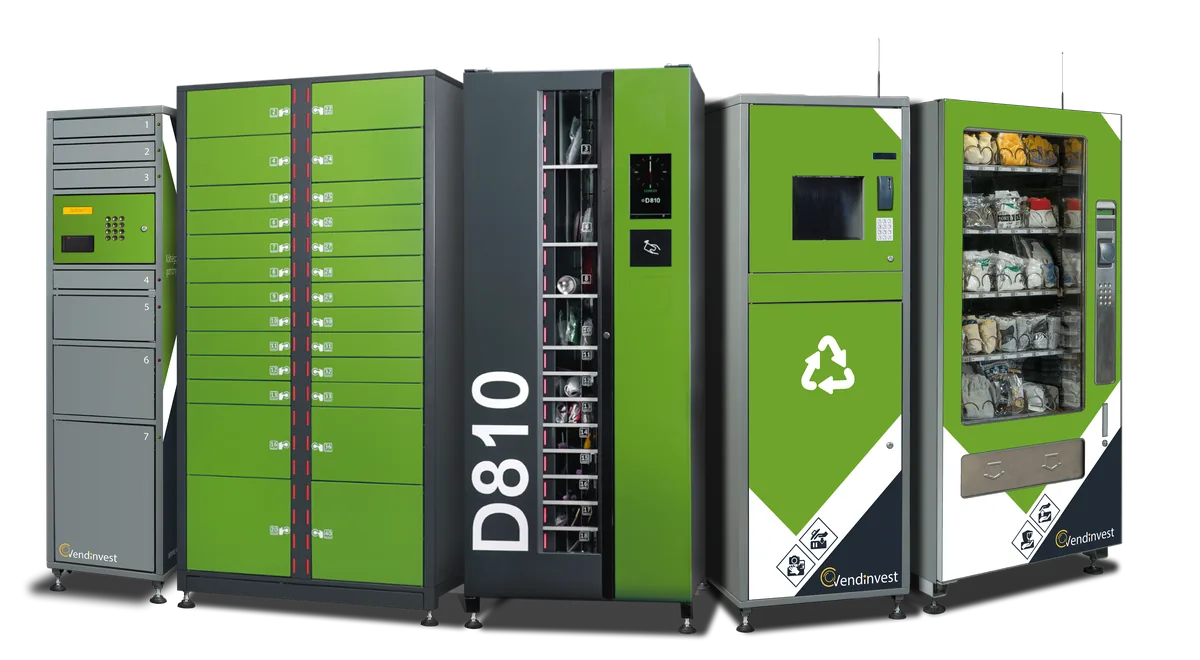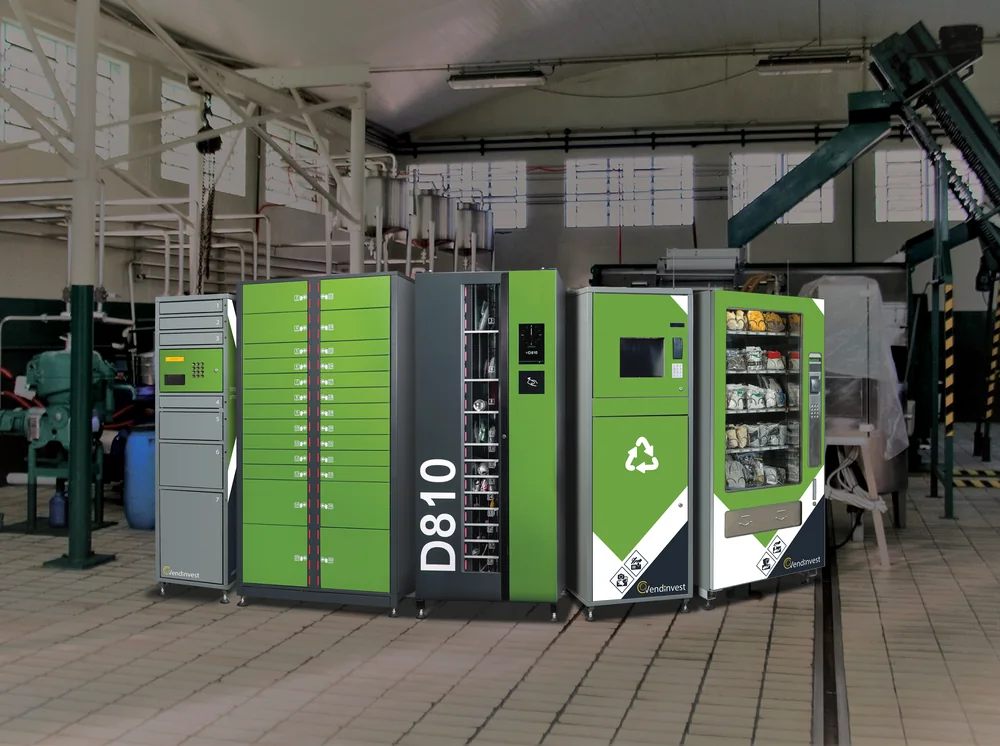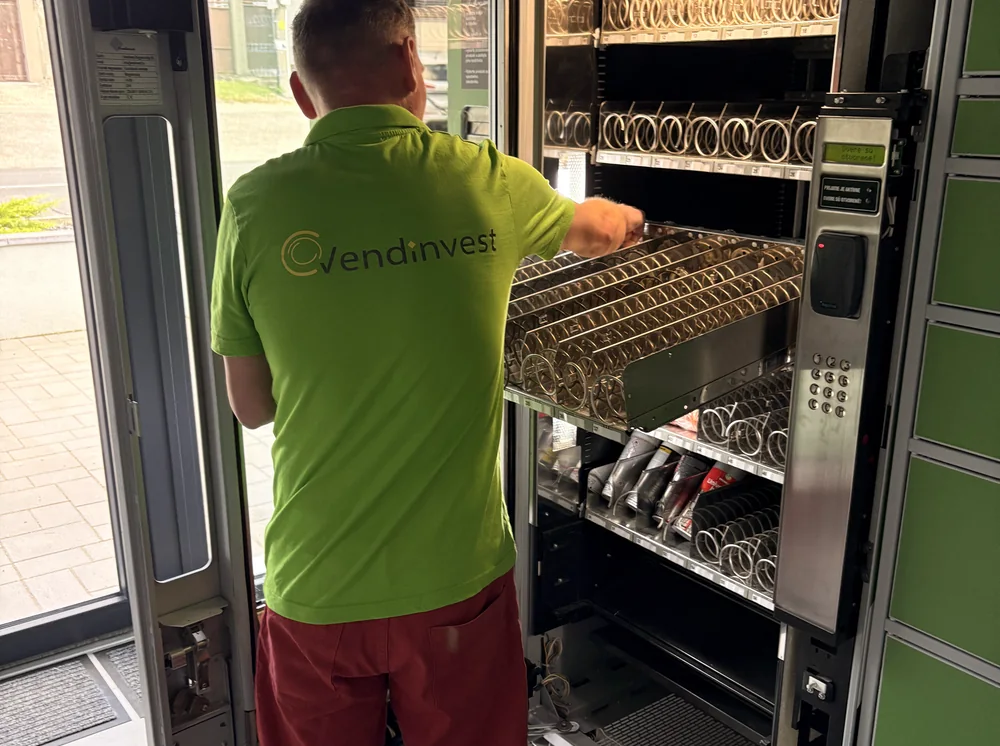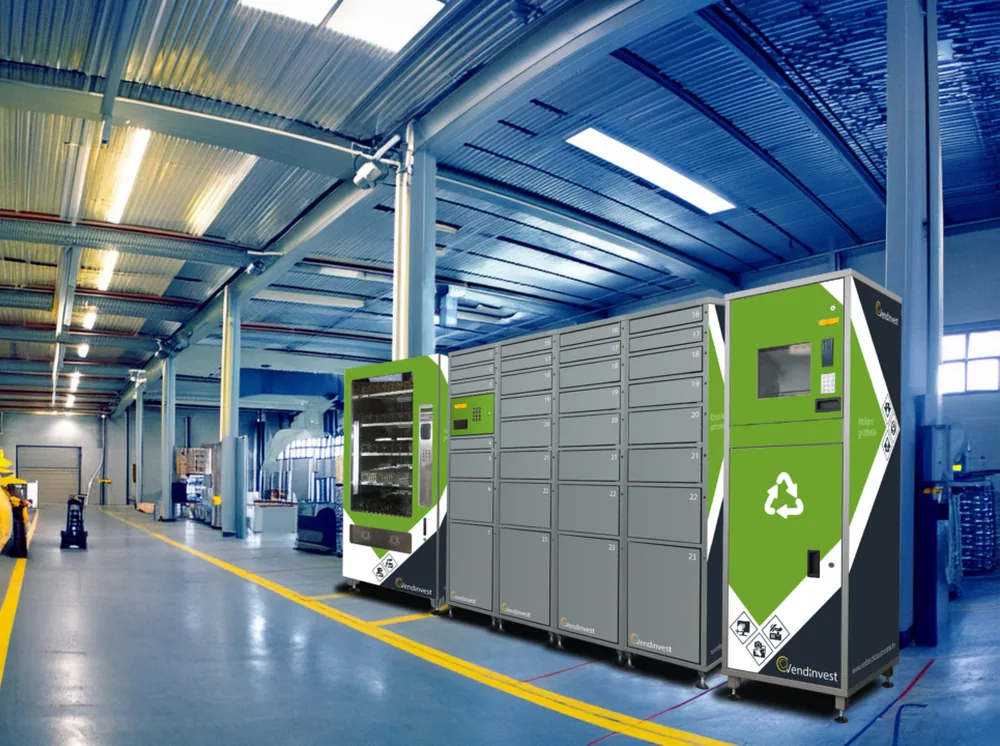
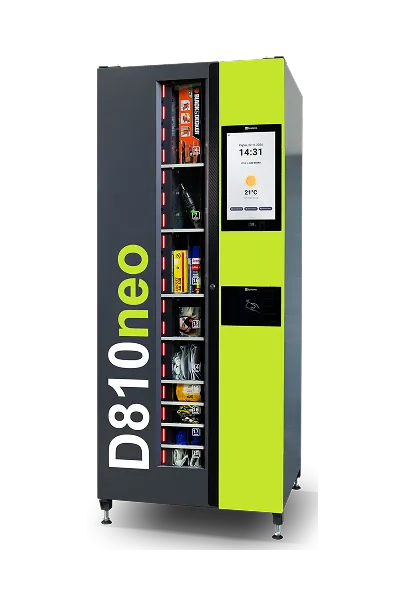
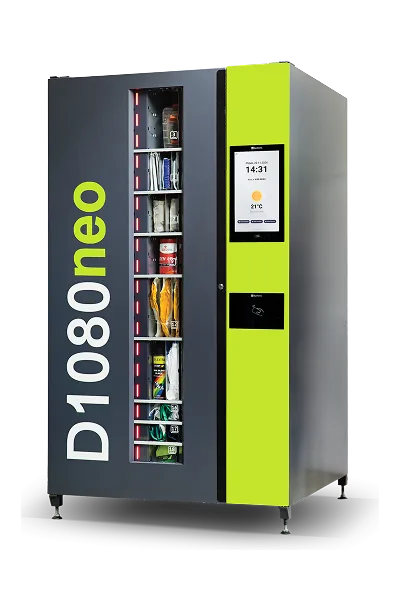
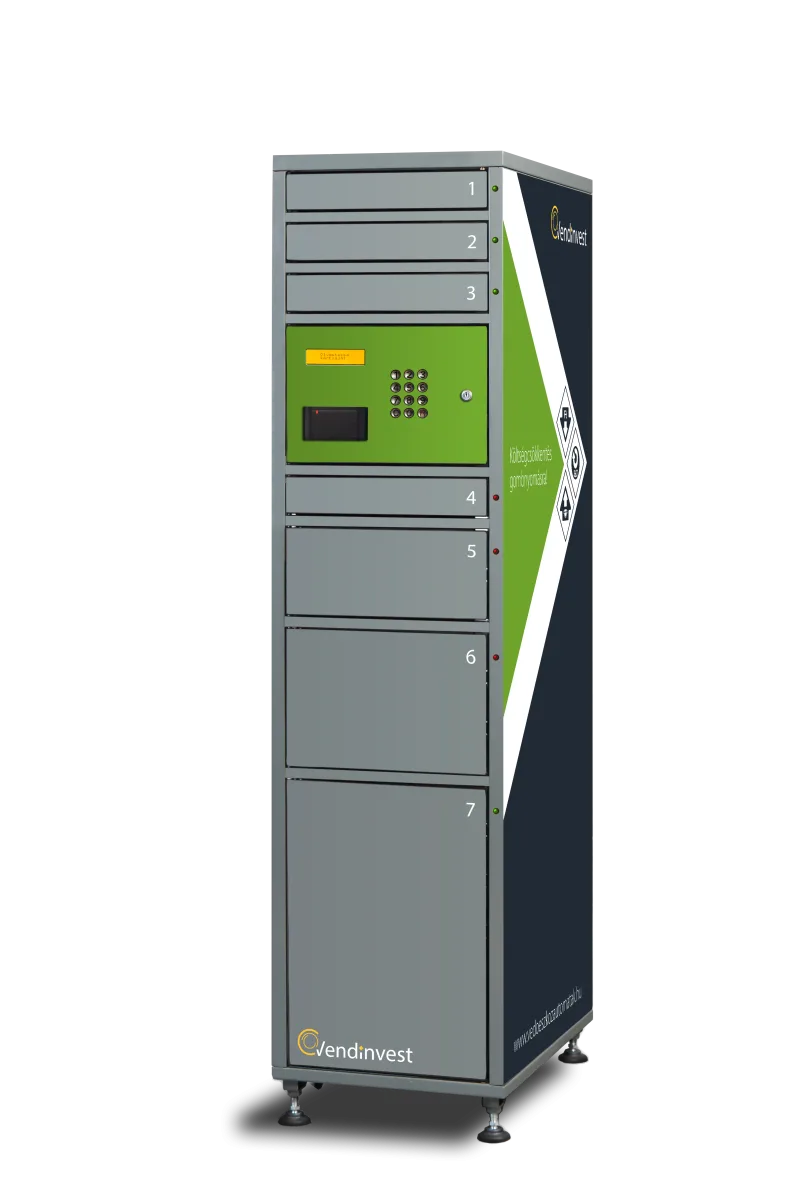
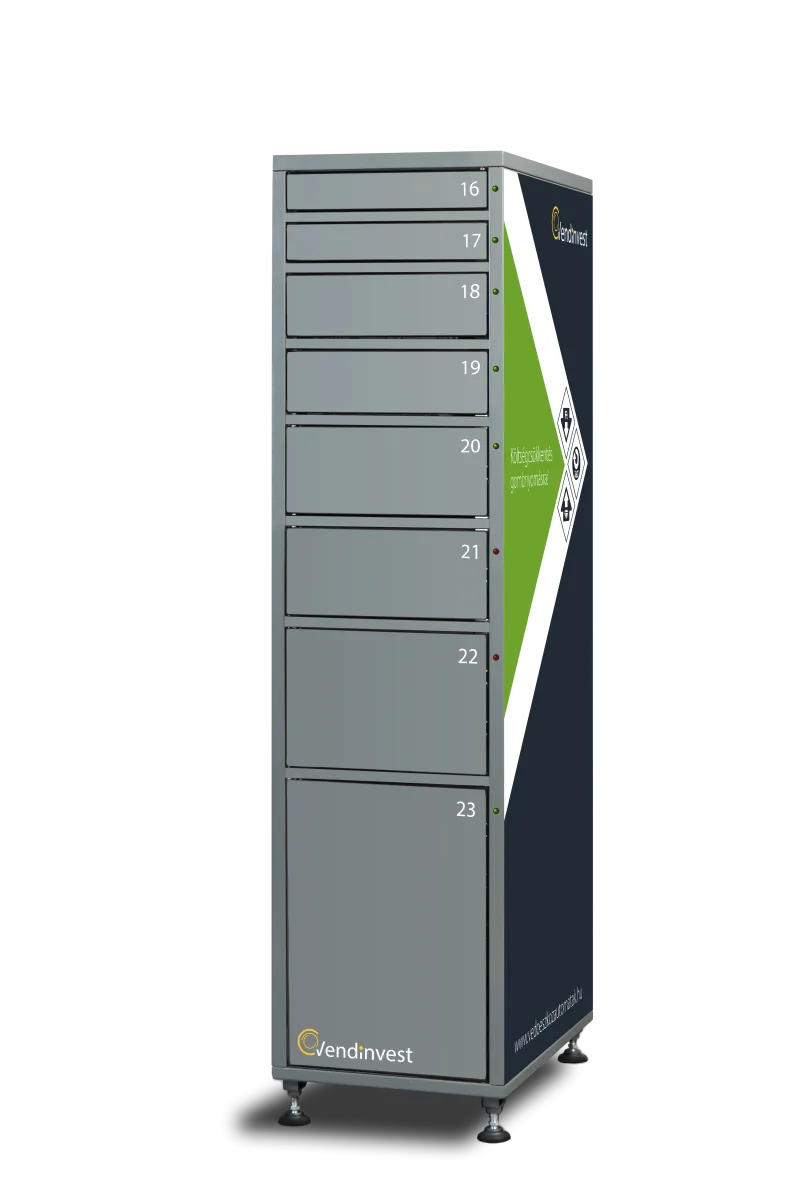
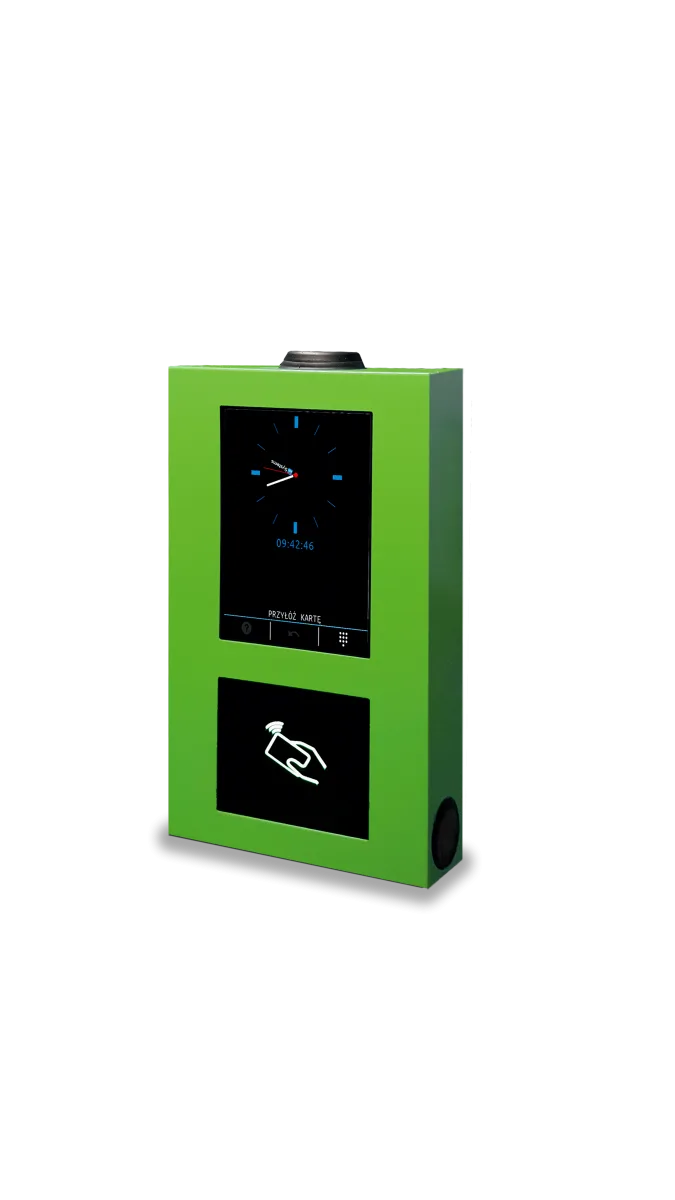
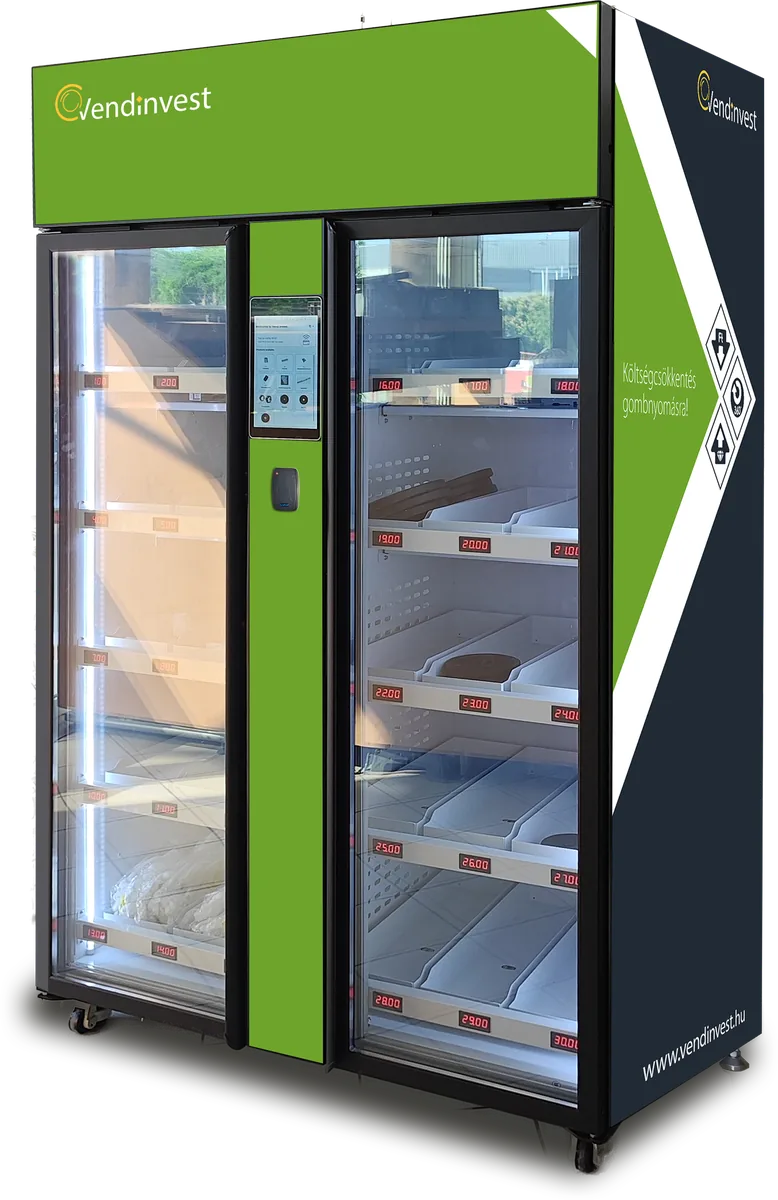
Services and support
From designing the solution through installation to ongoing service and software updates.
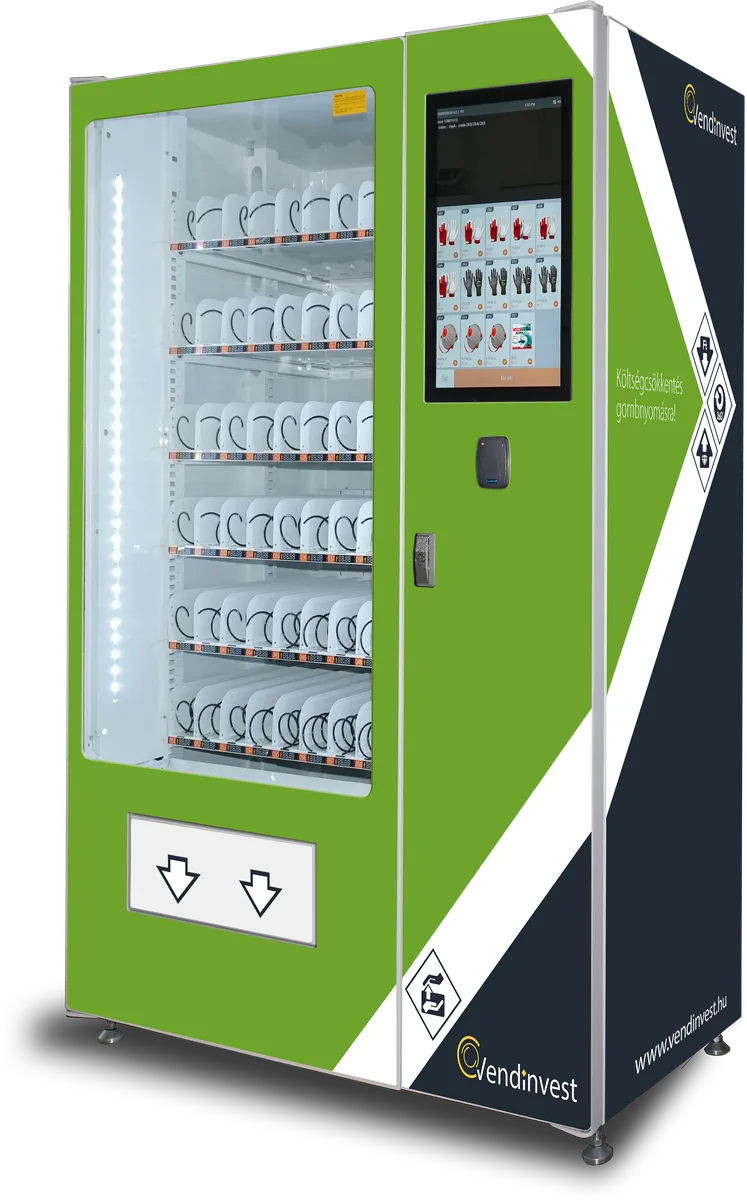
Spiral and lift vending machines
Precise handling of small, valuable, fragile or flammable items.
View categoryCarousel storage machines
Record storage capacity in a compact footprint, thanks to a rotating drum.
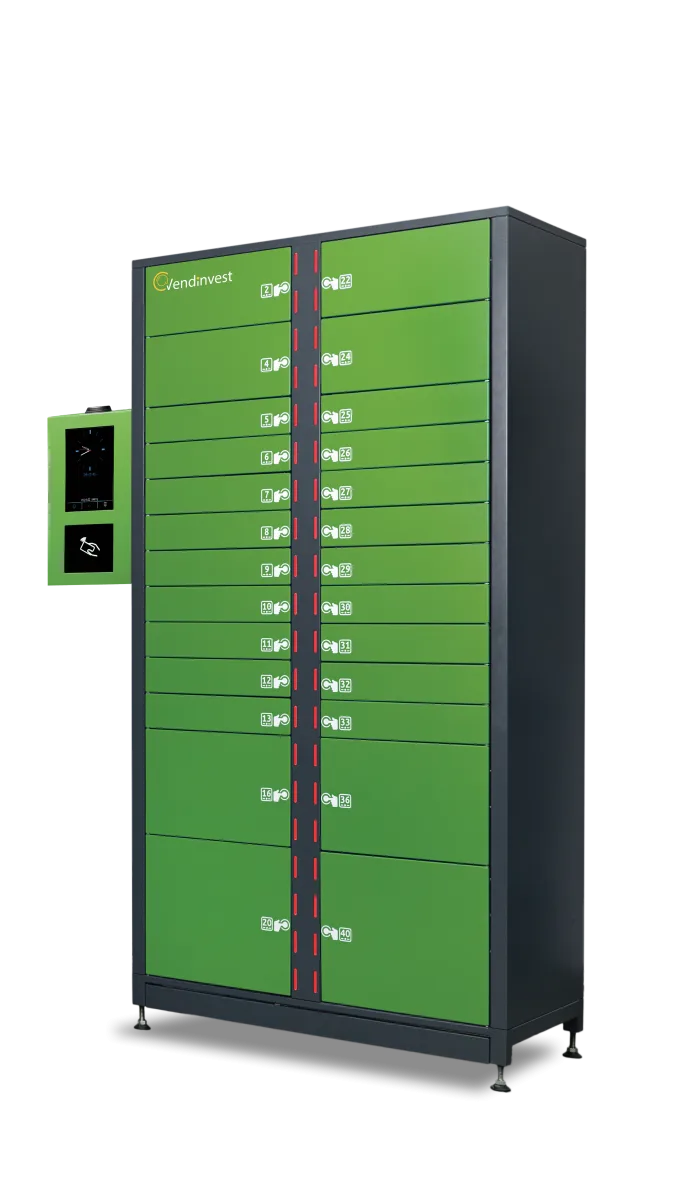
View categoryCabinet dispensing and storage machines
Safe handling of bulky equipment and power tools.
View categoryDecentralised storage and terminals
Dispensing and record keeping wherever the work happens, oversized items included.
View categoryWeighing dispensers and intelligent systems
Fast dispensing without scanning. Stock is booked automatically from the exact change in weight.
View categoryServices and support
From designing the solution through installation to ongoing service and software updates.
Financing
You can buy the machine or rent it. Both routes end in the same place.
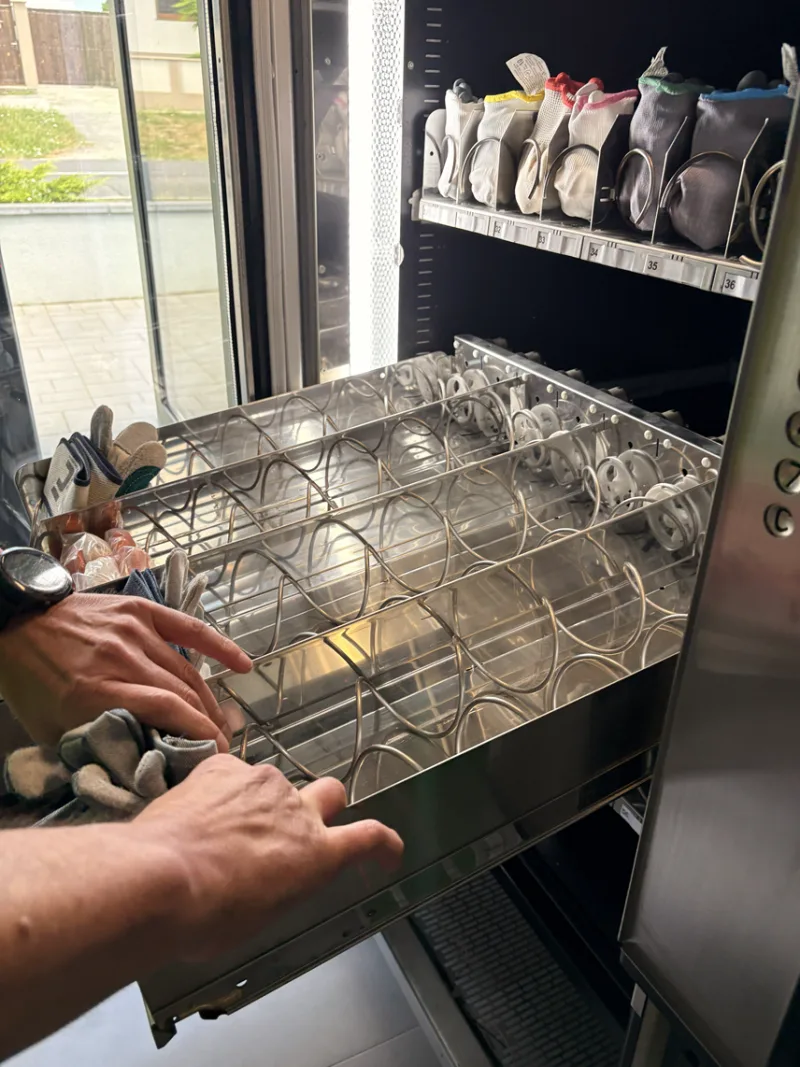
A no-obligation quote within 48 hours
Request a quoteGuide
The decree Slovak sites relied on for twenty years no longer applies. From 1 April 2026 there are new volume limits and a different classification. This guide sets out what that means for an ordinary site, which protective equipment is mandatory in an explosive atmosphere, and why records of what is issued are the shortcoming most often held against employers.
If you last checked the rules on flammable liquids before 2026, you are working from a repealed regulation. Decree No. 96/2004 Coll. of the Ministry of the Interior was repealed as of 31 March 2026.2
It was replaced by Decree No. 38/2026 Coll. on fire safety in the use of flammable liquids with effect from 1 April 2026. One part of it, Section 4(2) on labelling, only takes effect on 1 October 2026.1
Three changes matter for an ordinary site.
The wording of the provision
"Decree No. 96/2004 Coll. of the Ministry of the Interior of the Slovak Republic, laying down the principles of fire safety in the handling and storage of flammable liquids, heavy fuel oils and vegetable and animal fats and oils, is repealed."Section 66 of Decree No. 38/2026 Coll.
The new decree does not define the classification itself. It refers directly to the European CLP Regulation, Regulation (EC) No. 1272/2008, specifically Annex I, points 2.6.1 and 2.6.2.1
For a site that is good news. The category given in the safety data sheet and on the label is the same category Slovak fire safety law works with. There is no longer any need to convert between two systems.
The wording of the provision
"(1) A flammable liquid is a liquid as defined by a special regulation. (2) Flammable liquids are classified in accordance with a special regulation. (3) A category 3 flammable liquid heated to its flash point or above is treated as a category 2 flammable liquid."Section 3 of Decree No. 38/2026 Coll. The footnotes refer to Annex I, points 2.6.1 and 2.6.2 of Regulation (EC) No. 1272/2008.
Two quantities decide the category: the flash point and the initial boiling point.7
| Category | Criteria | Hazard statement |
|---|---|---|
| Category 1 | flash point < 23 °C and initial boiling point ≤ 35 °C | H224 Extremely flammable liquid and vapour. |
| Category 2 | flash point < 23 °C and initial boiling point > 35 °C | H225 Highly flammable liquid and vapour. |
| Category 3 | flash point ≥ 23 °C and ≤ 60 °C | H226 Flammable liquid and vapour. |
The third paragraph of Section 3 matters more in practice than it looks. A category 3 liquid heated to its flash point or above is assessed as category 2. So if the process heats something, the label is not enough and the operating temperature decides.
The procedure is therefore straightforward. Read the category off the hazard statement H224, H225 or H226, use it to work out the volume limits, and finally check whether the process heats any of the liquids.
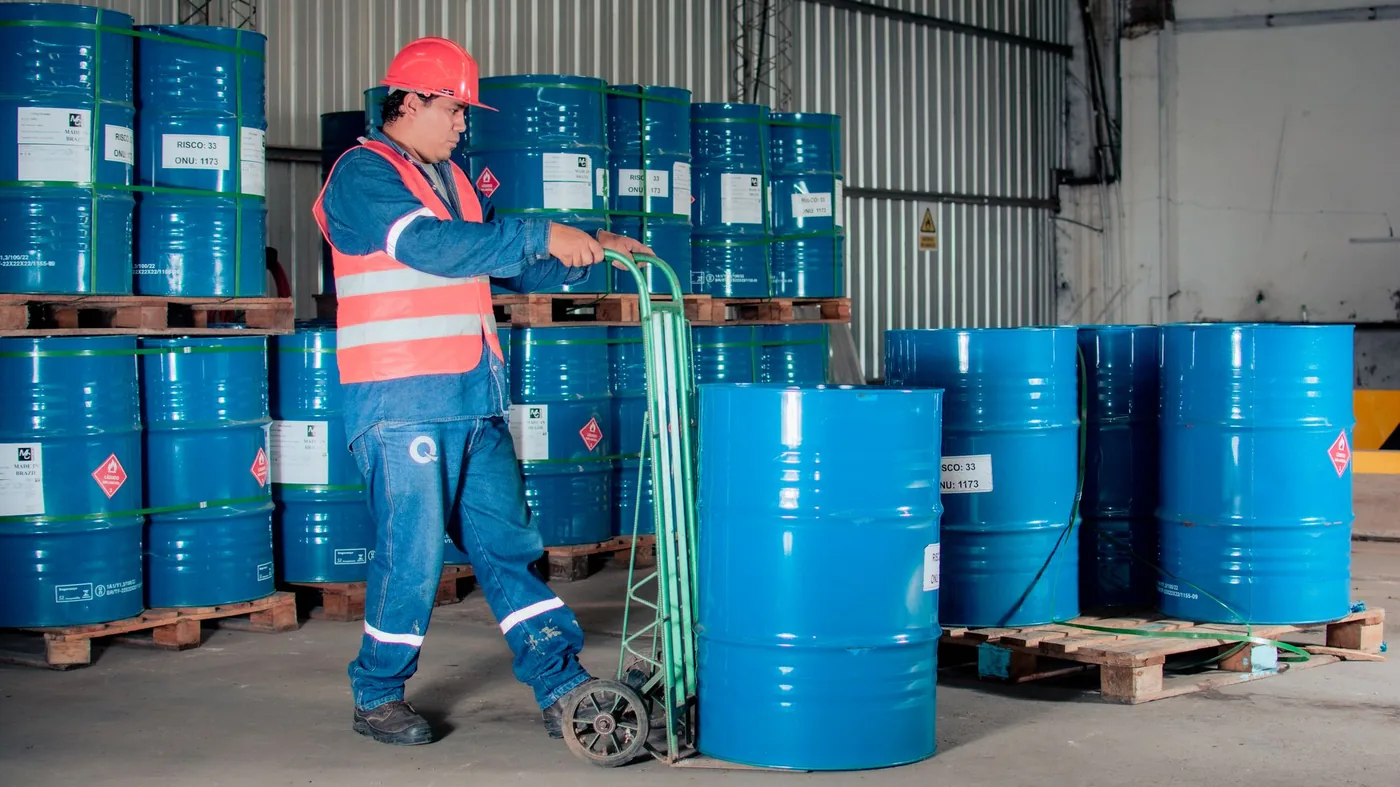
The largest volume of flammable liquids is graded by the floor area of the space. At most a tenth of the total volume may be category 1.1
| Floor area of the space | Largest volume | Of which category 1 |
|---|---|---|
| up to 100 m² | 250 l | at most 25 l |
| over 100 up to 500 m² | 500 l | at most 50 l |
| over 500 up to 1 000 m² | 1 000 l | at most 100 l |
| over 1 000 m² | 2 000 l | at most 200 l |
The threshold in the table has one more consequence that is easily missed. A building where flammable liquids are used in a larger volume than Annex 1 allows counts under Section 2(d) as an operating establishment, with all the requirements that follow. Staying below the threshold is therefore not just a matter of tidiness. It decides which regime the site falls under.
The decree also sets rules that bear directly on day-to-day handling.
What to take from this
The limits are counted from what is physically in the space. Sites that keep stock by the line just in case reach the threshold faster than they expect. Less stock at the workplace and topping up from the store is safer, and it is the only way to keep the volume demonstrably under control.
For keeping smaller quantities in the space itself, fire resistant storage cabinets are used to the standard STN EN 14470-1, valid in Slovakia in the edition of 1 October 2023.8
Here too there has been a change that has not yet reached suppliers' offers. The 2023 edition replaced the original from 2004. Besides extending the scope from 1 m³ to 2 m³ of internal volume, it brought one substantive change: the type 15 classification was withdrawn. If a supplier offers a cabinet described as type 15, it is citing a classification that no longer exists in the valid standard.
Where an explosive atmosphere can form, Government Regulation No. 393/2006 Coll. applies alongside the fire decree. It transposes the European ATEX workplace directive into Slovak law.3 Spaces are divided into zones according to how often an explosive atmosphere occurs.
| Zone | Occurrence of an explosive atmosphere |
|---|---|
| Zone 0 for gases, vapours and mists, zone 20 for combustible dust | continuously, for long periods or frequently |
| Zone 1 for gases, vapours and mists, zone 21 for combustible dust | likely only occasionally in normal operation |
| Zone 2 for gases, vapours and mists, zone 22 for combustible dust | unlikely in normal operation and, if it happens, only briefly |
Assigning a zone is not an administrative formality. It decides directly what equipment may be used in the space.3
The employer must have a written explosion protection document. Among other things it evidences that hazards have been identified and the explosion risk assessed, that preventive and protective measures have been adopted, that spaces have been classified, and which spaces and equipment are subject to special requirements.3
The regulation defines the zones but leaves the actual classification of a space to the site and its risk assessment. The German trade rule DGUV Regel 113-001, known as the Explosionsschutz-Regeln, offers practical help; its annex is a collection of worked examples of assigning spaces to zones.11 It is not binding in Slovakia and does not replace the explosion protection document, but it shows how to arrive at a classification for typical processes.
The values at which work stops
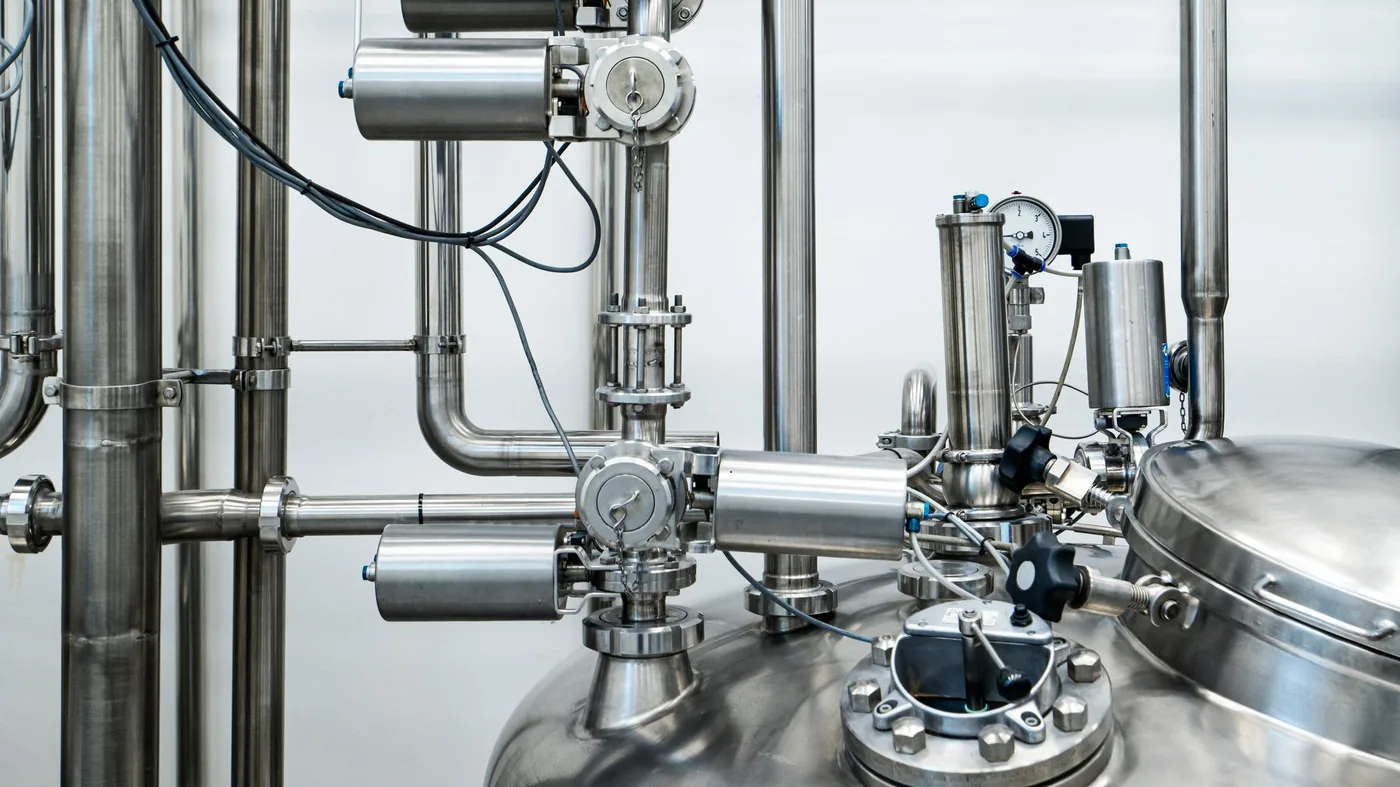
Where the explosion hazard has not been removed and the concentration of flammable substances rises above 25% of the lower explosive limit, work has to stop and the space has to be evacuated. Above 50% of the lower explosive limit, entry is prohibited. An employee must use self-contained breathing apparatus wherever the air does not hold at least 19% oxygen by volume.
Personal protective equipment is the last line of protection. It is provided where the danger cannot be eliminated or limited by technical means, by collective protection or by the organisation of work.4 Once that point is reached, though, it is a hard duty.
For an explosive atmosphere the provision on antistatic protection matters most. Government Regulation No. 393/2006 Coll. states it without exceptions.
The wording of the provision
"The employer must provide employees, in accordance with a special regulation, with protective clothing and footwear whose materials do not cause electrostatic discharges capable of igniting an explosive atmosphere."Annex 2, part A, point 3.3.1 of Government Regulation No. 393/2006 Coll.
Four rules from the health and safety act and the PPE regulation come on top, and together they shape how issuing should work.
In an explosive atmosphere the training cycle is shorter than the usual three year period under the health and safety act. Practical training in using self-contained breathing apparatus and in emergency procedures is repeated at least once a year.3
In practice the requirement for materials that do not cause electrostatic discharges is met by choosing equipment to harmonised standards. For an environment with flammable substances these three, in the versions valid in Slovakia, are the relevant ones.8
| Standard | Name | Edition |
|---|---|---|
| STN EN 1149-5 | Protective clothing. Electrostatic properties. Part 5: Material performance and design requirements | 1. 12. 2019 |
| STN EN ISO 11612 | Protective clothing. Clothing to protect against heat and flame. Minimum performance requirements | 1. 9. 2016 |
| STN EN ISO 20345 | Personal protective equipment. Safety footwear | 1 January 2023, amendment A1 of 1 December 2024 |
For each kind of work the PPE list should name the specific type of equipment, including the standard it is certified to. General wording such as protective clothing is, according to the labour inspectorate, one of the main reasons shortcomings are recorded.
The National Labour Inspectorate publishes an annual report on the state of occupational safety. For 2024 it records 7 888 registered accidents at work, 25 of them fatal, five more than in 2023.6
The direction is more interesting than the count. While most large inspected areas fell year on year, PPE recorded the sharpest rise in findings at 22.67%. The inspectorate also names where it sticks. The main problem is a list of effective PPE that is missing or inadequate, and difficulty in naming the specific type of equipment. Among the other findings the report lists:6
The first point can be solved systematically. Records kept by hand on paper or in a spreadsheet are practically unsustainable in shift work and impossible to evidence during an inspection.
The European comparison shows this is a cost question, not only a legal one. According to Eurostat data for 2023, Slovakia recorded 8 027 non-fatal accidents at work, 2 961 of them in manufacturing. That is more than any other sector, at an incidence rate of 556.53 per 100 000 workers.9 The European Agency for Safety and Health at Work puts the total cost of work related accidents and illnesses in the EU at at least 476 billion euros a year.10
International prevention work outside state supervision reaches the same conclusion as the Slovak inspectorate. The Vision Zero strategy, led by the International Social Security Association, sets the safety of machines, equipment and workplaces, raising qualifications, and involving employees as three separate rules out of seven.12 Seen that way, documentation is the result of a system that works, not a substitute for one.
The inspectorate's assessment
The labour inspectorate considers it a fundamental and very serious problem across all kinds of business that owners, directors and managers do not always know the legislation in force well enough, and secondly that legal requirements are met inconsistently.
A site working with flammable substances has to meet four things at once that look contradictory at first: keep as little material at the workplace as possible, have protective equipment available at all times, be able to show who received it and when, and not pass the cost to the employee.
That is exactly the job for controlled issuing. A vending machine covers all these requirements at once.
Important when siting the machine
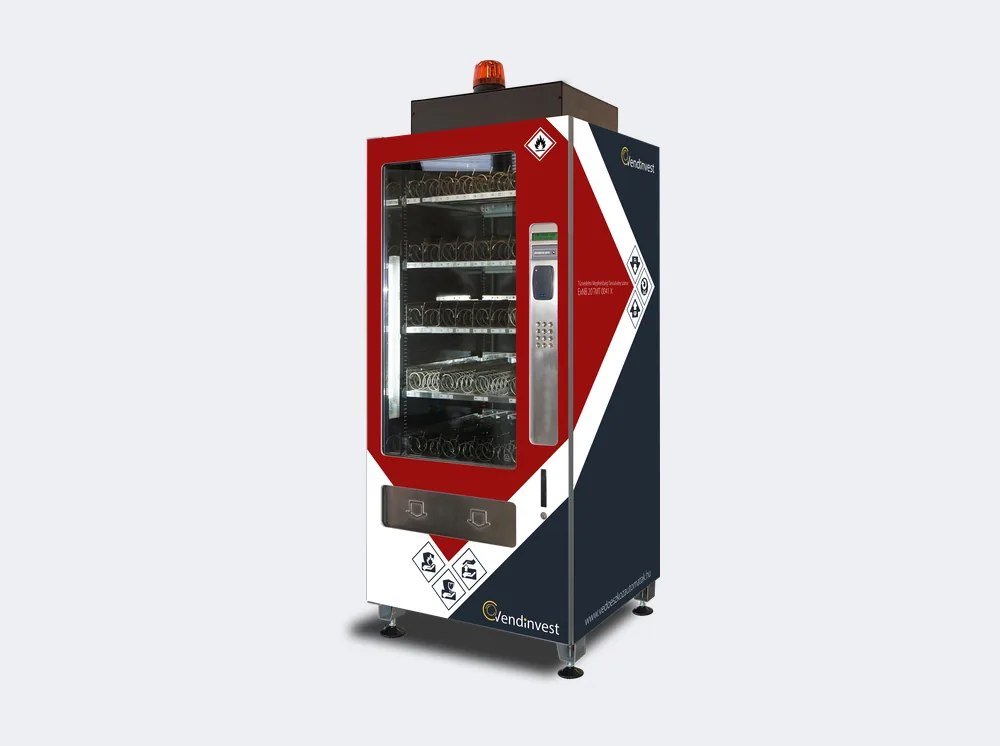
An ordinary vending machine is not equipment intended for a classified zone. Because the zone decides the permitted equipment category, the machine is usually sited outside the classified zone, typically at the entrance to the space, in the changing room or in a corridor. Employees collect their protective equipment there before going in. Always check whether a particular machine suits a particular zone with the supplier and against the explosion protection document.
For the flammables themselves in commercial packaging, aerosols and chemicals, our range has the W8 EX LIFT with fire certification and a special version of the lift mechanism. The protective equipment for working with them is covered by spiral and lift machines or cabinet machines where the items are larger.
Nine questions every site working with flammable substances should be able to answer.
Are we working from the current regulation, Decree No. 38/2026 Coll., and not from the repealed 96/2004?
Have we established the CLP category of every liquid from its safety data sheet?
Have we checked whether the process heats any category 3 liquid to its flash point or above?
Do we know the floor area of the space and the matching volume limit, including the ten percent share for category 1?
Are empty containers stored separately and is the place marked EMPTY CONTAINERS?
Do we have a current written explosion protection document and classified zones?
Does the category of the equipment used in a zone match that zone's classification?
Do we provide antistatic protective clothing and footwear, and do we have a PPE list naming specific types?
Can we show at any time who received PPE and when, and is the practical training repeated at least once a year?
No. Decree No. 96/2004 Coll. of the Ministry of the Interior was repealed as of 31 March 2026, and from 1 April 2026 it was replaced by Decree No. 38/2026 Coll. on fire safety in the use of flammable liquids. Both the volume limits and the classification have changed; the classification now follows the categories in the European CLP Regulation.
Under Annex 1 to Decree No. 38/2026 Coll. the limit is graded by the floor area of the space. Up to 100 m² it is 250 litres; over 100 and up to 500 m², 500 litres; over 500 and up to 1 000 m², 1 000 litres; and over 1 000 m², 2 000 litres. No more than 10% of that volume may be category 1 liquids.
Yes. Section 6(2)(b) of Act No. 124/2006 Coll. on health and safety requires the employer to provide the necessary effective PPE free of charge and to keep records of what was issued. According to the National Labour Inspectorate, keeping no such records, or keeping them wrongly, is among the most frequently recorded shortcomings.
Yes. Annex 2, part A, point 3.3.1 of Government Regulation No. 393/2006 Coll. requires the employer to provide protective clothing and footwear whose materials do not cause electrostatic discharges capable of igniting an explosive atmosphere.
The category is set by the CLP Regulation according to the flash point and the initial boiling point. Category 1 has a flash point below 23 °C and a boiling point up to 35 °C; category 2 a flash point below 23 °C and a boiling point above 35 °C; category 3 a flash point from 23 °C to 60 °C. In practice the hazard statement on the label gives it away: H224 means category 1, H225 category 2 and H226 category 3.
Only if it is equipment of the category that matches the zone. In zone 0 or 20, category 1 equipment is allowed; in zone 1 or 21, category 1 or 2; and in zone 2 or 22, category 1, 2 or 3. An ordinary vending machine is therefore usually placed outside the classified zone, for example at the entrance to the space or in the changing room.
Legislation is cited as in force on the date this guide was updated. Sources that are not Slovak legislation are marked in the list and are informative. This text is for information and does not replace legal advice or an assessment of a particular site.
Decree No. 38/2026 Coll. of the Ministry of the Interior on fire safety in the use of flammable liquids
Decree No. 96/2004 Coll. of the Ministry of the Interior, repealed
Government Regulation No. 393/2006 Coll. on minimum requirements for health and safety at work in explosive atmospheres
Government Regulation No. 395/2006 Coll. on minimum requirements for the provision and use of personal protective equipment
Act No. 124/2006 Coll. on occupational health and safety
Report on the state of occupational safety and on the activity of the labour inspection authorities for 2024
Regulation (EC) No. 1272/2008 of the European Parliament and of the Council on the classification, labelling and packaging of substances and mixtures
Catalogue of Slovak technical standards, entries STN EN 14470-1, STN EN 1149-5, STN EN ISO 11612 and STN EN ISO 20345
Accidents at work by economic activity, 2023 data, datasets hsw_n2_01 and hsw_n2_02
An international comparison of the cost of work-related accidents and illnesses
DGUV Regel 113-001, Explosionsschutz-Regeln (EX-RL)
Vision Zero, the seven golden rules
Recommended model
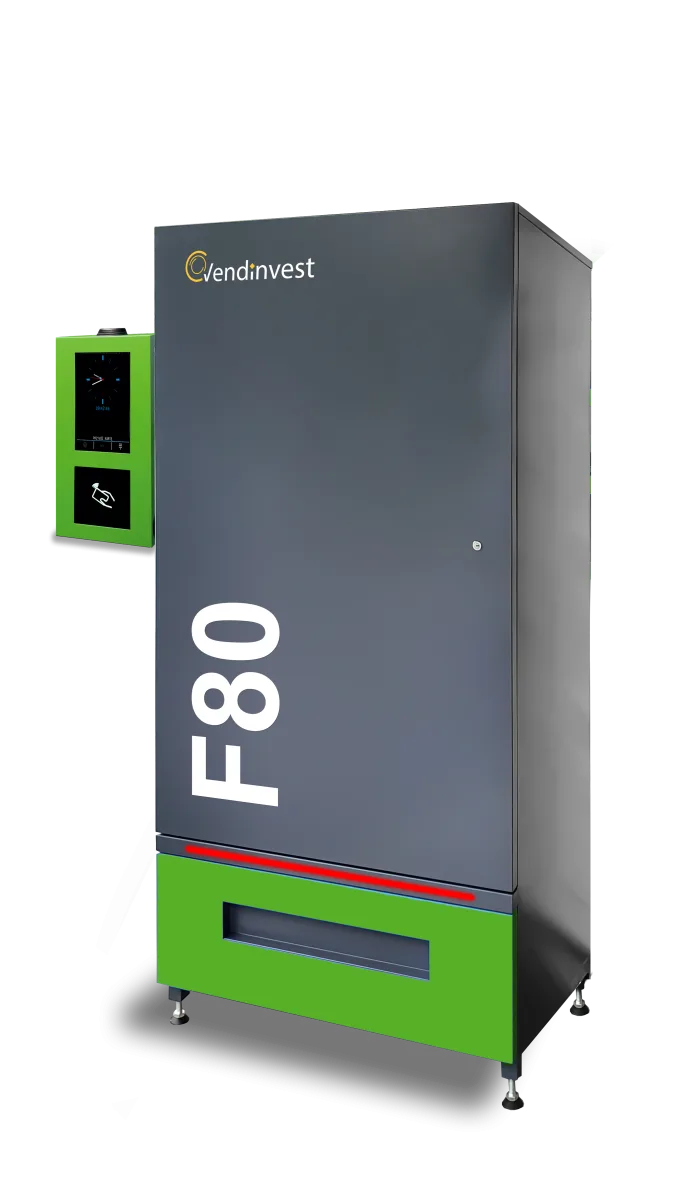
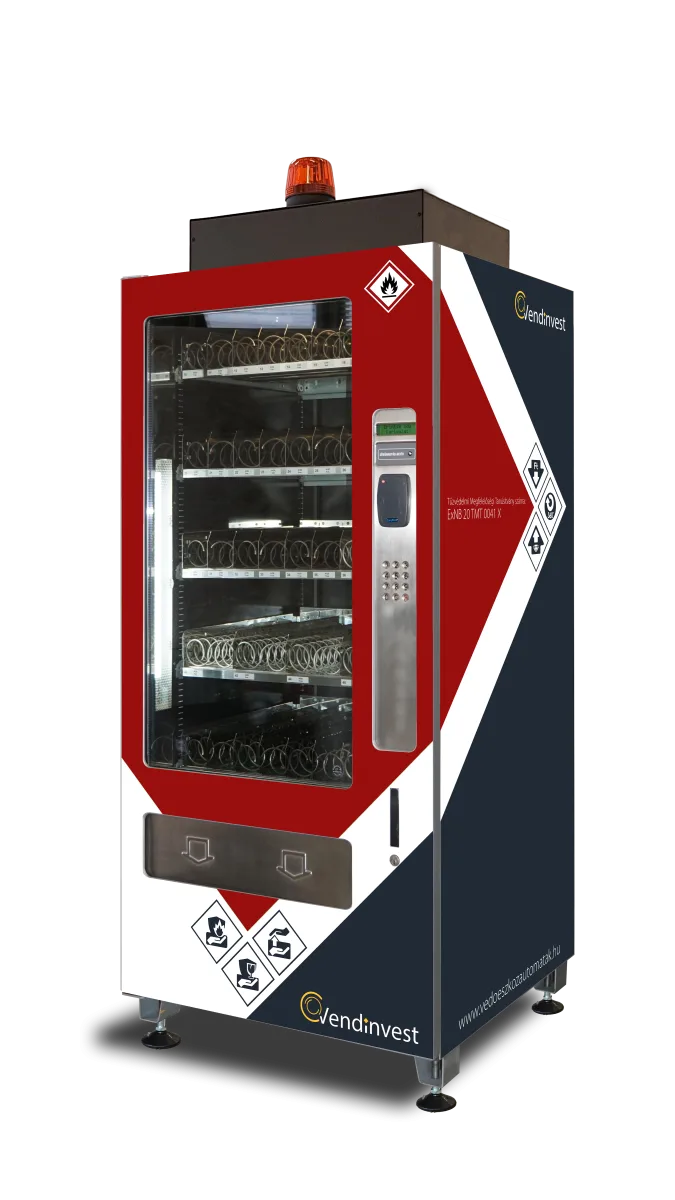
Only one model in our range is built for aerosols, adhesives, thinners and chemicals in commercial packaging. It carries fire certification and its lift mechanism has a special ATEX version.
Where to next
Open a category to see what is in it. The button takes you to its page.
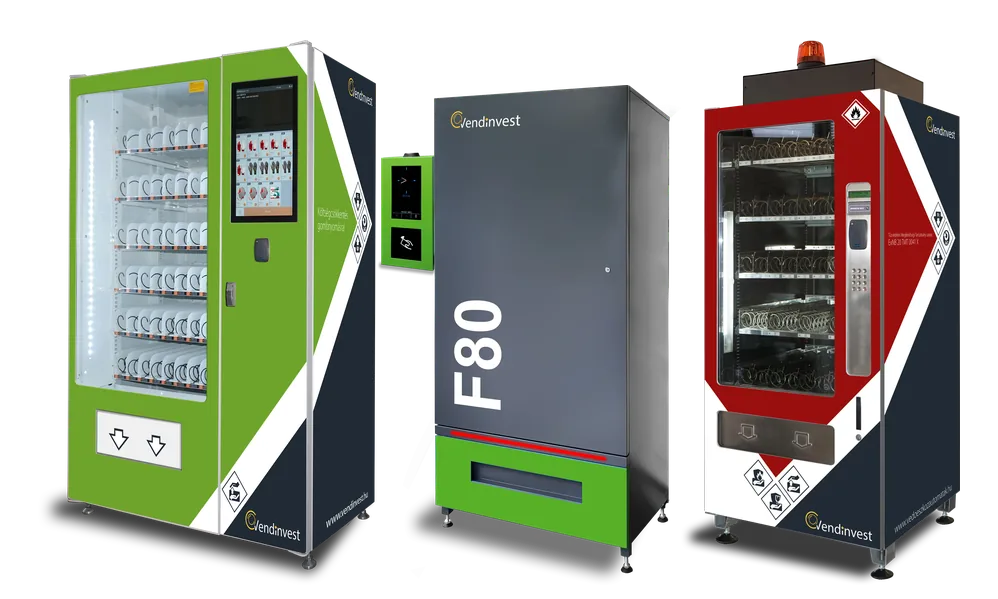
4 models · W40 DROP, W40 LIFT, W8 EX LIFT, F80 BASIC
Precise issuing piece by piece for small, valuable, fragile or flammable items.
Go to the category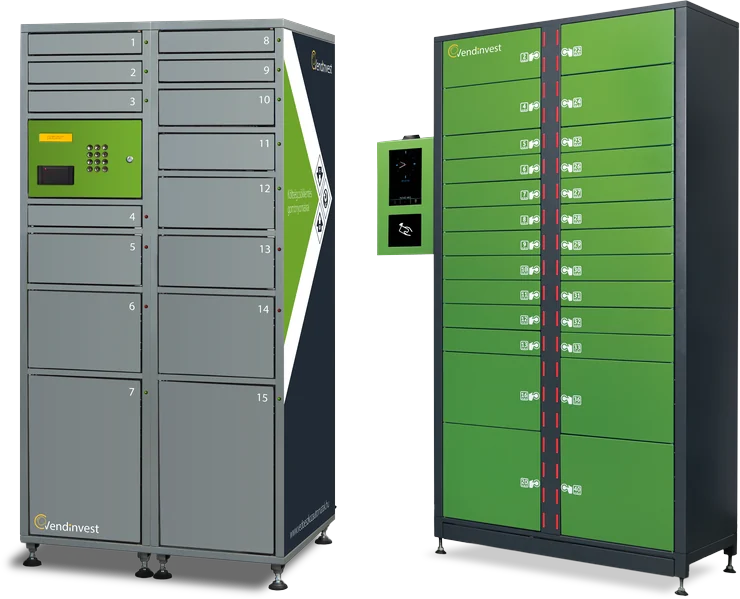
3 models · SZV 15, SZB 18, L40
Large items under lock. The L40 can also charge cordless tools inside the locked cabinet.
Go to the category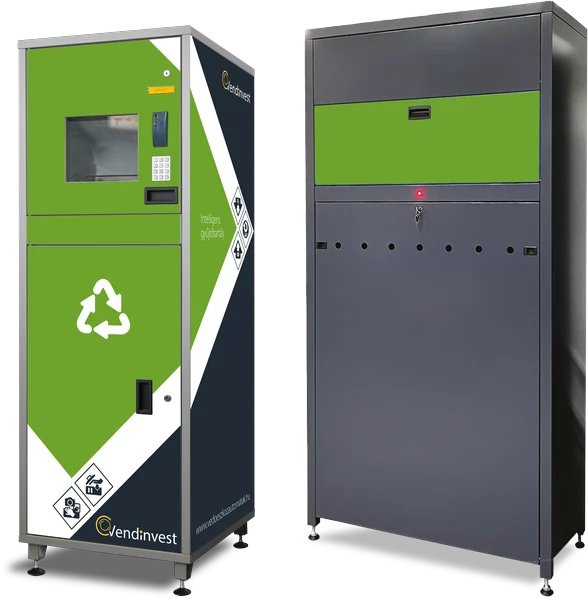
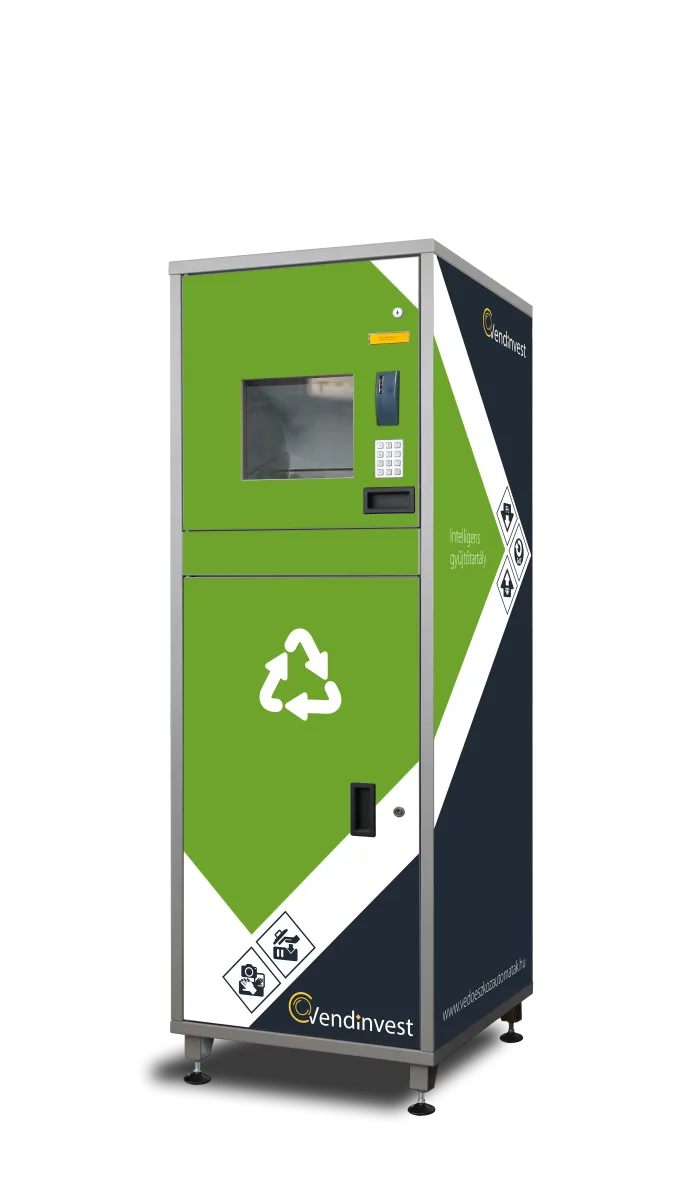
2 models · X1 CAM, C240 OEM
Under Section 62(4) of the decree, empty containers are stored separately. A take-back unit gives that step a place and a record.
Go to the categoryMore guides
Duties for work equipment and PPE, records of what is issued, and penalties.
Weight limits, racking inspections and records across halls.
The authorised person, intervals and records, isolation from power.
The new act on sales records, the exemption for vending machines and deposit return.
A consultation with no obligation
Tell us which substances you work with and how many people need access to them. We will propose a set of machines and a way of recording what is issued.