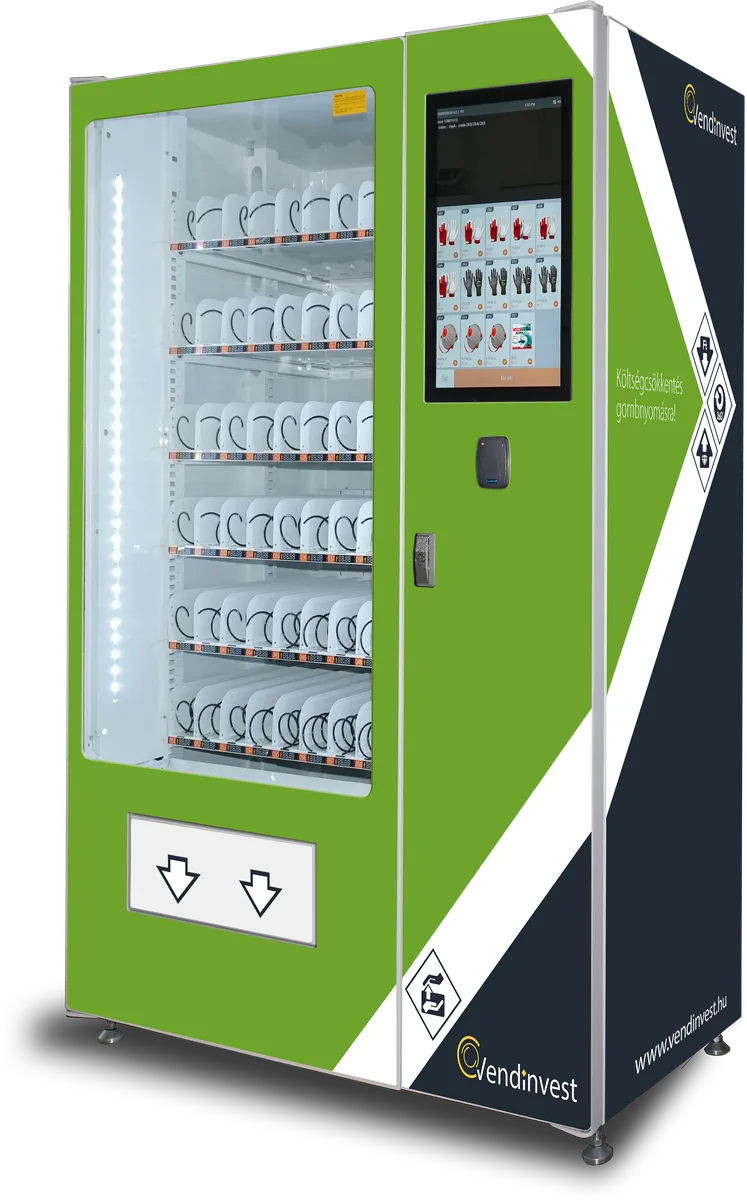
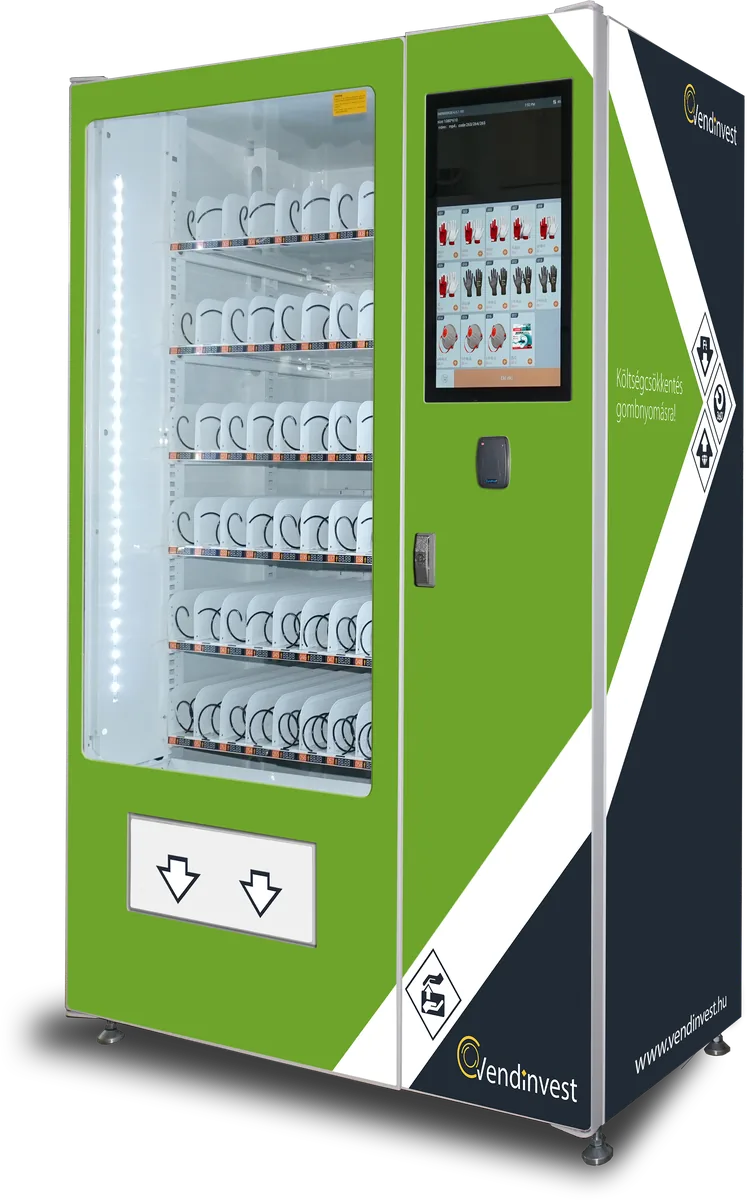
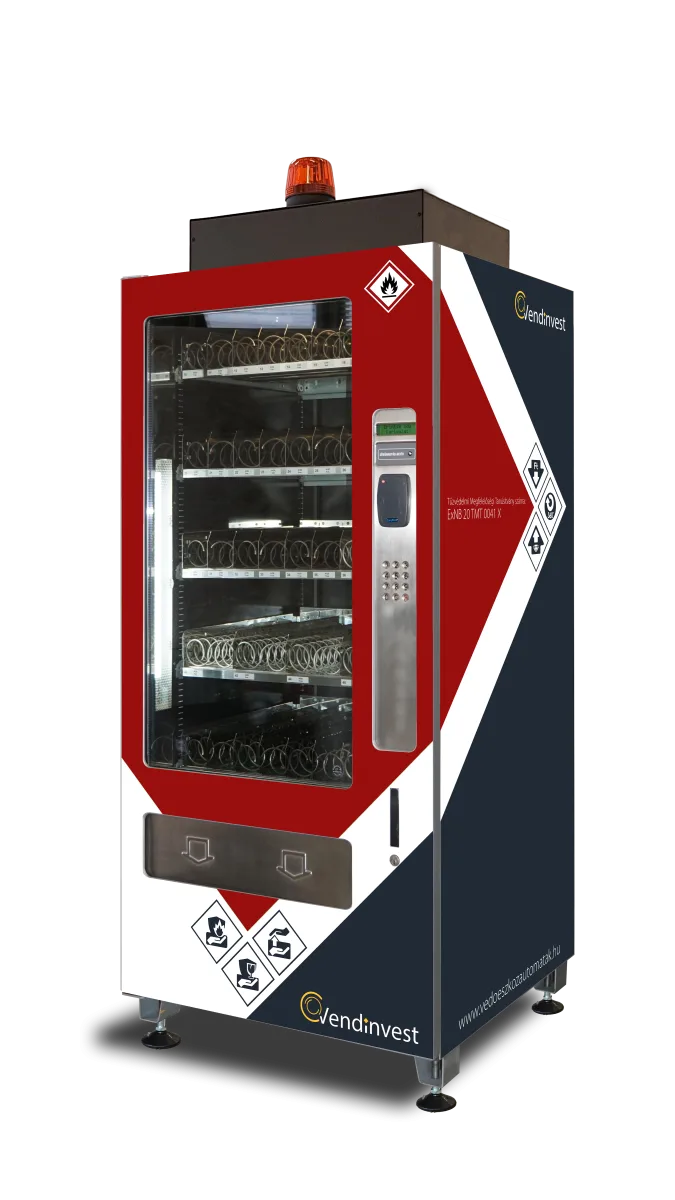

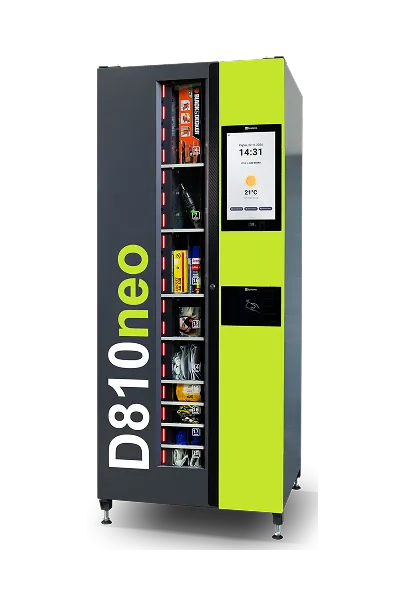


Services and support
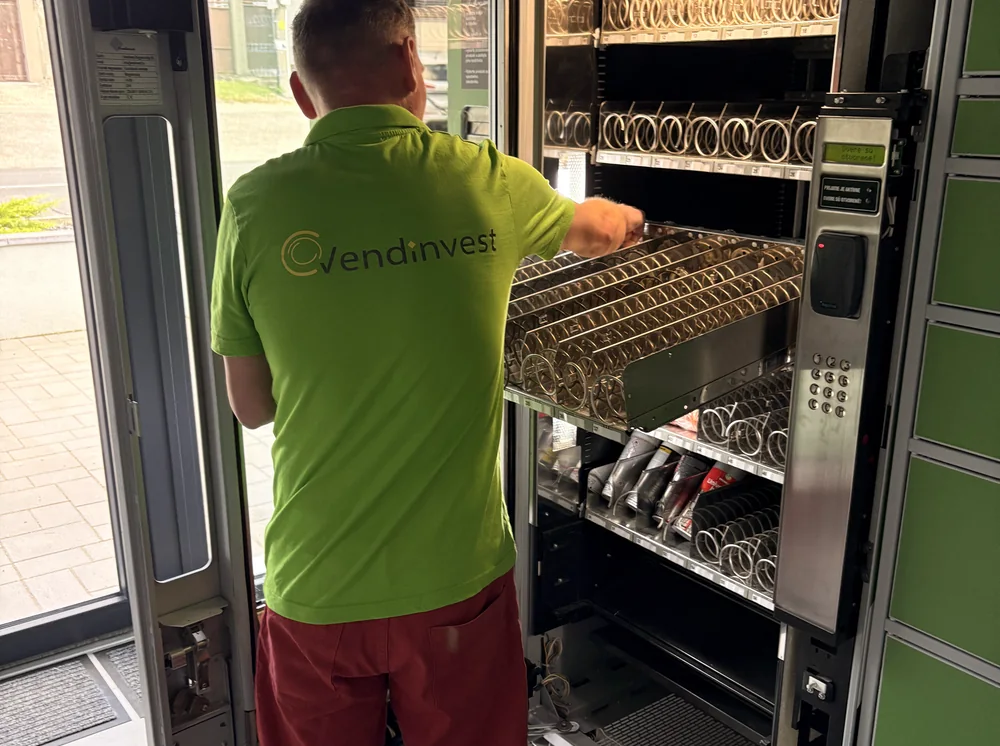
From designing the solution through installation to ongoing service and software updates.
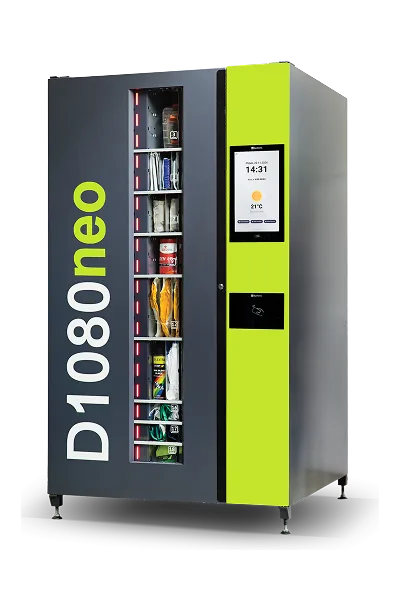
Spiral and lift vending machines
Precise handling of small, valuable, fragile or flammable items.
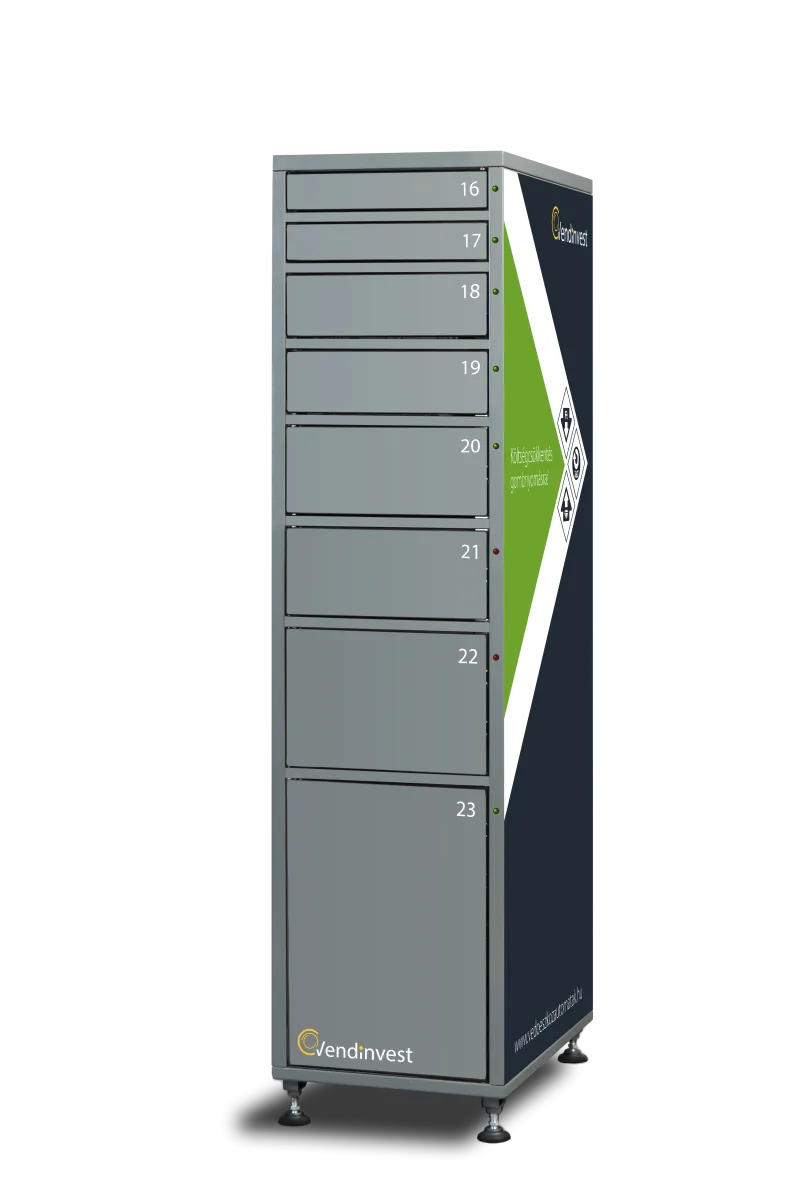
View categoryCarousel storage machines
Record storage capacity in a compact footprint, thanks to a rotating drum.
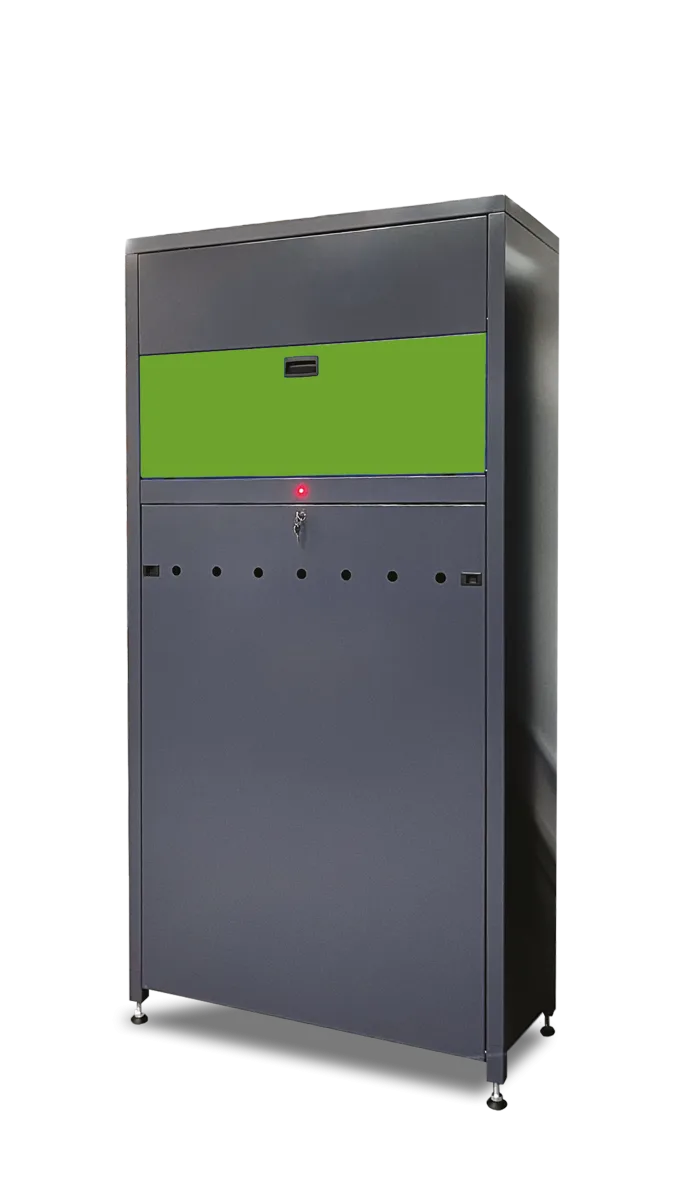
View categoryCabinet dispensing and storage machines
Safe handling of bulky equipment and power tools.
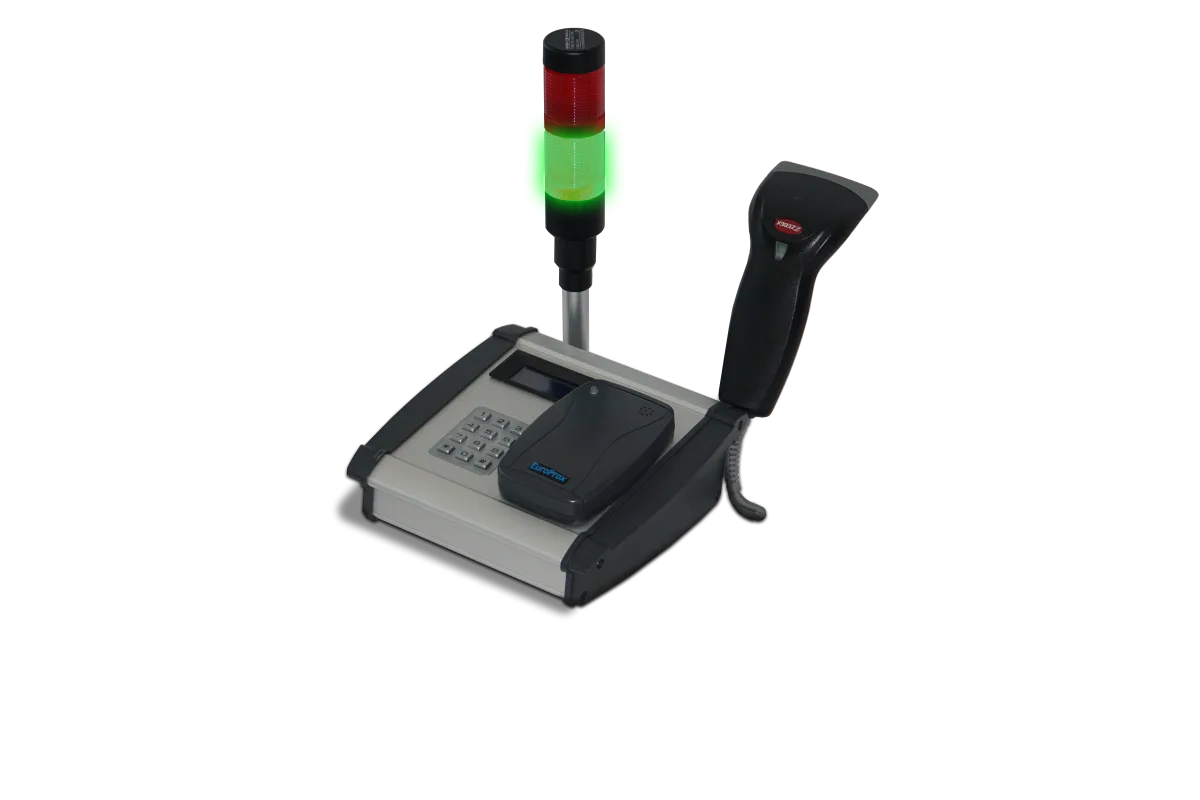
View categoryDecentralised storage and terminals
Dispensing and record keeping wherever the work happens, oversized items included.
View categoryWeighing dispensers and intelligent systems
Fast dispensing without scanning. Stock is booked automatically from the exact change in weight.
View categoryServices and support
From designing the solution through installation to ongoing service and software updates.
Financing
You can buy the machine or rent it. Both routes end in the same place.
A no-obligation quote within 48 hours
Request a quoteGuide
According to the labour inspectorate, machines and designated technical equipment produce more findings than any other area inspected, and electrical equipment is the worst of it. This guide sets out who may carry out maintenance, what intervals and records belong to it, what the rules say about isolating a machine from its energy sources, and how tools that are issued and returned get recorded.
The labour inspectorate recorded 41 338 findings in 2025. For designated technical equipment the figure was 8 816, which is 8.4% lower than in 2024. It is still one of the largest groups, and the report adds an assessment that matters more to service teams than the number itself.7
Finding of the labour inspectorate
"Machines and designated technical equipment generate the most findings, and the worst situation is with electrical equipment. Companies ignore the dates of expert and official tests and keep no operating logs. Equipment is often run with guards missing."Report on the state of occupational safety and on the activity of the labour inspection authorities for 2025
Three things in one sentence, and all three belong to maintenance: test dates, operating logs and guards. The report adds that this technical condition, together with poorly trained operators, is among the most common causes of accidents at work.7
In the 2025 statistics on the sources of accidents, machines caused 668 registered accidents and tools, including hand tools, a further 661. Together that is 1 329 cases, almost eighteen percent of all registered accidents.7
Government Regulation No. 392/2006 Coll. on work devices, in force since 1 July 2006 and never amended, divides the people around a machine into two categories: operation and maintenance.1
The wording of the provision
"Where the use of a work device may particularly endanger an employee's safety and health, the employer must take the necessary measures so that a) the work device is used by an employee assigned by the employer, b) care of the work device, maintenance work, repair work and modification work is carried out by an authorised person."Section 6 of Government Regulation No. 392/2006 Coll.
The difference between an "assigned employee" and an "authorised person" is not a matter of style. Anyone the employer assigns may operate the machine. Only someone authorised for it may carry out maintenance, repairs and modifications. Training must be demonstrable in both cases, and for maintenance it must also be separate.
On inspections of work devices, the National Labour Inspectorate specifies that inspections under Section 5 may be carried out by an authorised legal person under Section 14(1)(d) of the health and safety act, or by an accredited independent type A inspection body under STN EN ISO/IEC 17020 in the field of machinery.8
Annex 1 to the regulation on work devices contains the sentence that maintenance planning starts from: where maintenance is prescribed for a work device, the maintenance dates must be observed.1 It can be prescribed by the manufacturer in the manual, by legislation or by a standard.
If nobody prescribes it, the decision does not disappear, it moves. Under Section 5(3) the employer sets the scope and frequency of inspection. On top of that, an authorised person carries out a special inspection whenever exceptional circumstances arise, in particular a modification, a fault, an accident, a natural event or a longer break in use, under Section 5(2).
The records then carry a requirement of their own, one that tends to be underrated.
The wording of the provision
"The employer must keep records of the results of inspections [...] so that they are available to the competent supervisory authorities at any time if needed. Where a work device is used outside the employer's workplace or premises, it must be accompanied at the place of use by the relevant records of the last inspection."Section 5(4) of Government Regulation No. 392/2006 Coll.
The second sentence matters more to service teams than the first. A device that travels with an engineer to another site has to carry the last inspection record with it, not leave it in a folder at head office.
For forming machines, the intervals and the method of inspection are set by clause 7.3 of STN 21 0700, listed as valid in the ÚNMS SR catalogue with an edition dated 13 December 1985 and a last amendment from March 1997.9
The most dangerous moment in maintenance is not the work on the machine but the machine starting unexpectedly during it. The Slovak rules deal with that in a single sentence in Annex 1.
The wording of the provision
"A work device must be fitted with a clearly marked switching element for isolating it from all energy sources. Reconnection must not endanger the employee."Annex 1, point 2.14 of Government Regulation No. 392/2006 Coll.
The rule says what has to be achieved, not how. The German trade publication DGUV Information 209-015 Instandhaltung an Maschinen und Anlagen, in its June 2026 edition, describes a concrete procedure and is one of the few current, self-contained guides on the subject.10 It gives three ways to prevent unauthorised, accidental and unexpected starting: isolation of the circuit by an electrician, a lockable main switch, and isolation of individual drives with a safety switch. It adds a sentence worth remembering: switching off without securing against reconnection does not achieve the aim.
The publication also points to what is most often forgotten during isolation: the danger from stored energy, which is still active in the system after isolation and has to be assessed separately. Capacitors, frequency converters, pressure in hydraulics and pneumatics, raised loads and tensioned springs are not discharged by throwing the main switch.
For work on electrical equipment the same publication gives five rules, normally to be followed in this order.10
Isolate the equipment from the supply.
Secure it against reconnection.
Verify that it is dead.
Earth and short circuit.
Cover or fence off adjacent live parts.
What to take from this
The German publication is not binding in Slovakia. The order of the five rules matches what is taught here, and the Slovak rule requires the same outcome through its sentence that reconnection must not endanger the employee. A lockable main switch and a tag with the engineer's name are the cheapest way to meet that sentence demonstrably.
Decree No. 508/2009 Coll., as in force since 1 September 2014, sets out which pressure, lifting, electrical and gas equipment counts as designated, and sorts it into groups A, B and C by the level of danger.4 The group decides what inspections and tests the equipment needs and who may carry them out.
For service teams that brings a second layer of duties, this time on the people side. Professional competence is confirmed by a certificate, and the details of training and education are governed by Decree No. 356/2007 Coll. as in force since 1 March 2023.5 The document is not issued for good, though.
The wording of the provision
"A natural person holding a certificate or other document under paragraph 1(b) must complete further refresher training within five years of the day the previous refresher training was completed."Section 16 of Act No. 124/2006 Coll. on occupational health and safety
The five year period runs from the end of the previous training, not from the issue of the document. The person authorised to provide the training writes the date into the certificate itself, so checking validity is a matter of one look at the document. The act also covers temporary incapacity for work, during which the period is treated as preserved under stated conditions.2
The operation of electrical installations is covered by STN EN 50110-1. The ÚNMS SR catalogue lists the valid edition dated 1 May 2024. The earlier editions from 2001, 2005 and 2014 have been withdrawn.9 A reference to the 2014 edition, the one most often found in internal documentation, now points to a withdrawn standard.
Maintenance often happens where nobody normally goes: on top of a machine, on a platform, on a ladder. Annex 2 to the regulation on work devices has a separate part on temporary work at height, with one principle that sets the order of solutions.1
Where temporary work at height cannot be carried out safely and in ergonomically suitable conditions from a suitable surface, the most appropriate work equipment must be selected to establish and maintain safe working conditions. Collective protective measures take precedence over individual ones. The dimensions of the work equipment must match the nature of the work and the expected load.
For maintenance planning that means a guard rail on a platform is the better answer under the rules than a harness, even though the harness is cheaper and quicker to hand.
A tool is a work device like any other, so the same duties apply: suitability for the job under Section 3(1), inspections under Section 5 and demonstrable training under Section 8.1 In the 2025 statistics on the sources of accidents, tools and hand tools stand right behind machines with 661 cases.
Compared with production, service teams have two differences that make record keeping harder.
Protective equipment is subject to the same rules as anywhere else. The employer provides it free of charge and keeps records of what was issued under Section 6(2)(b) of the health and safety act, retains the documentation for five years from the last entry under Section 6(1)(n), and checks continuously that it is properly used under Section 9(1)(d).2 The PPE regulation adds a requirement that is hardest for teams spread over several places. Where the same item is used by more than one employee, it must be available to the employee whenever it is needed, under Section 3(3)(b).6
Besides ignored test dates and missing operating logs, the 2025 report names what lies behind them.
The inspectorate's assessment
According to the report, the main problem at Slovak workplaces remains a formal attitude to health and safety. Employers treat it mainly as protection against penalties rather than as a way of actually protecting health. The safety service prepares the documentation for them, but in practice nobody works with it.
With protective equipment the picture is the same as in other industries. Missing, inadequate or unsuitable PPE caused eight accidents in 2025, and failure to use the PPE prescribed and issued caused eighty-four. The inspectorate names an employer control system that does not work as one of the reasons.7
International prevention work outside state supervision reaches the same conclusion. The Vision Zero strategy, led by the International Social Security Association, puts the safety of machines, equipment and workplaces as rule five and raising qualifications as rule six of seven.11
Act No. 125/2006 Coll. on labour inspection, as in force since 7 June 2026, treats as a serious breach, among other things, failure to provide a guard or a safety device or failure to keep it working.3 That is exactly the situation the inspectorate describes with machines running without their guards, which as a rule happens after maintenance.
| Situation | What the inspectorate does | Rate |
|---|---|---|
| Breach of duties under Section 19(1) | may impose | up to 100 000 € |
| Serious breach under Section 19(2) | imposes | 1 000 to 200 000 € |
| A breach resulting in an accident with serious injury | imposes | at least 20 000 € |
| A breach resulting in a fatal accident | imposes | at least 33 000 € |
A penalty can also be imposed on a manager who breached the duties through their own fault, up to four times their average monthly earnings. The employer's liability for the same breach is unaffected. Proceedings can be started within six months of the end of the inspection and no later than three years from the day of the breach.3
Unlike production, maintenance has few people and many items. That is why it loses track of where things are more than anywhere else. Controlled issuing settles four things at once.
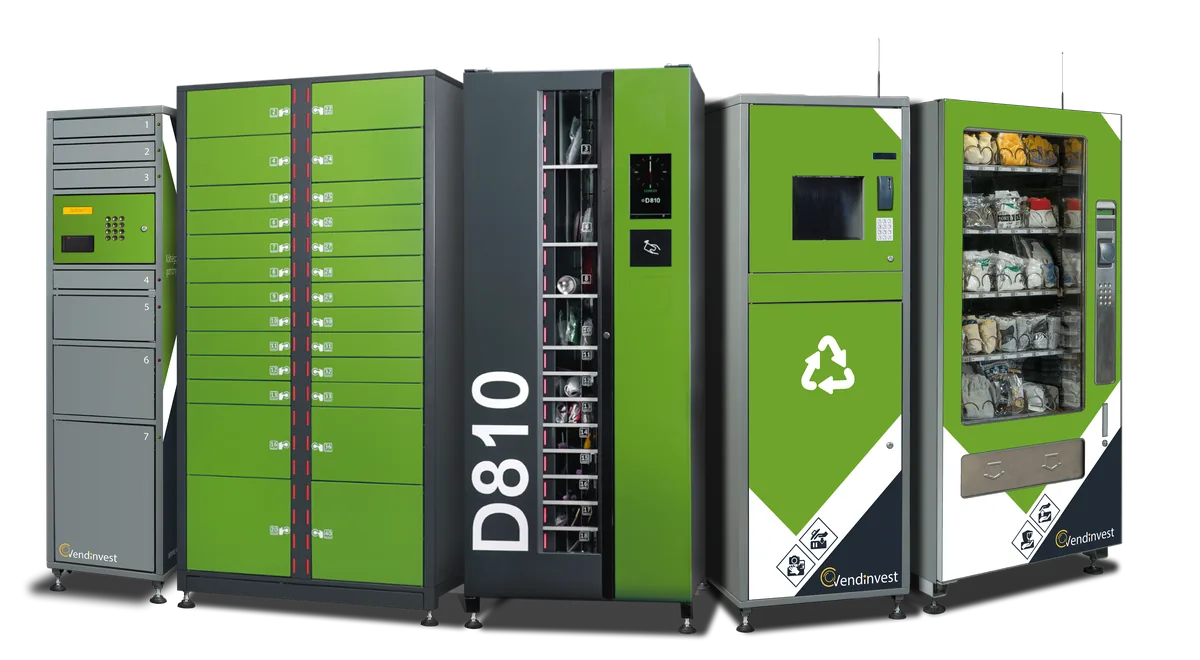
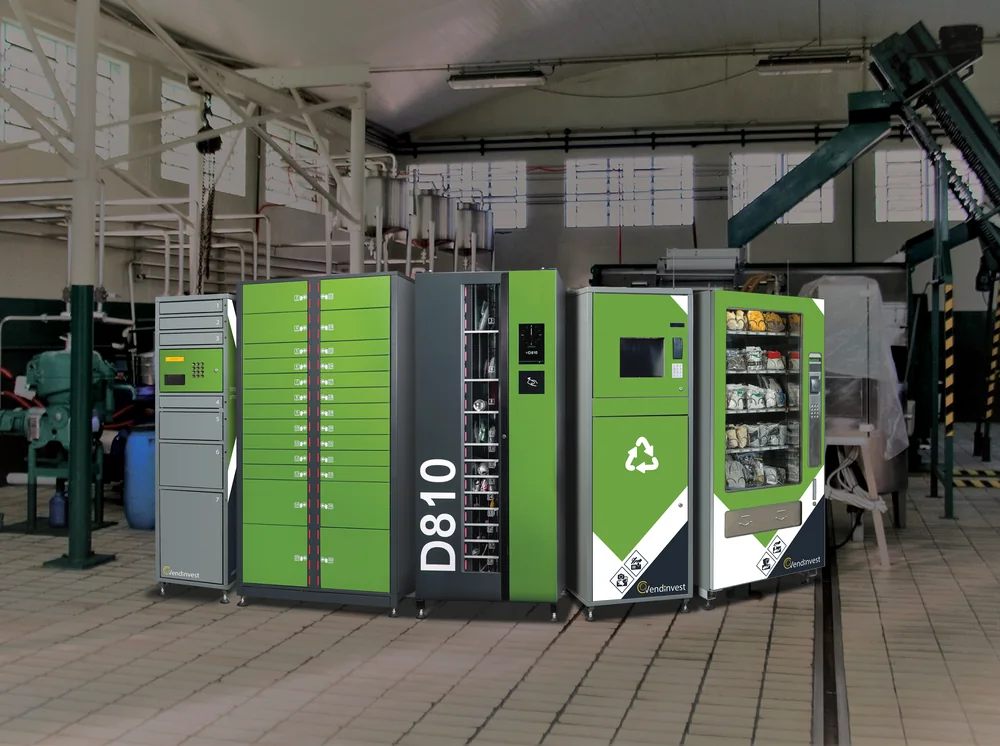
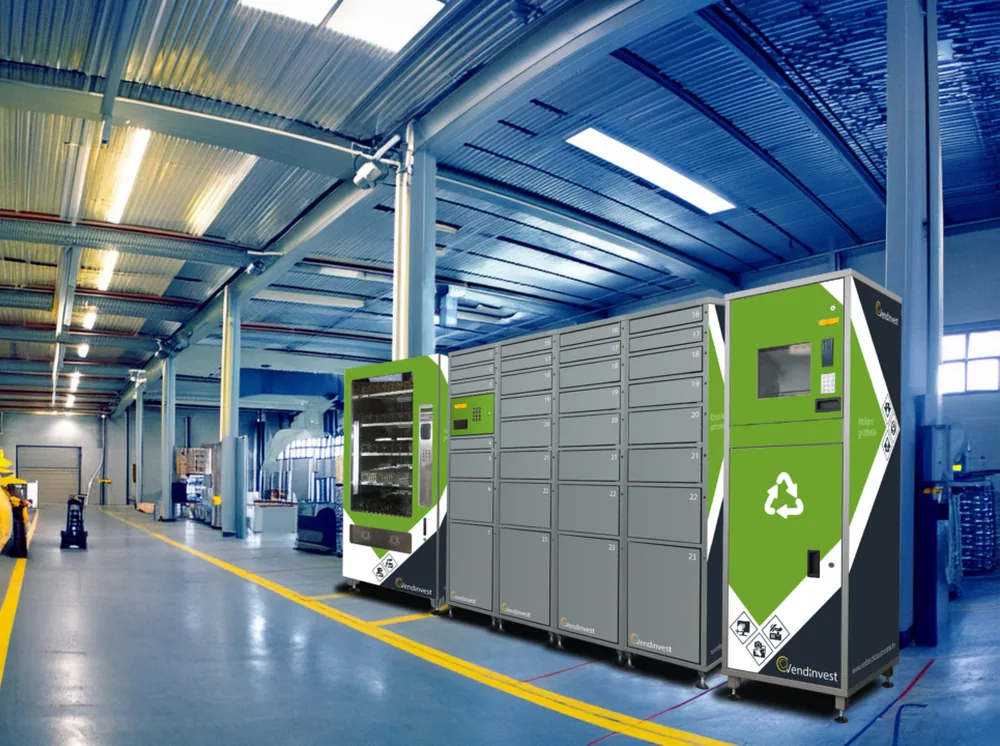
From our range, service teams most often use the L40 with lockable compartments and charging for cordless tools, SZV 15 for larger items, and the X1 CAM for controlled collection of damaged tools due for replacement.
Ten questions every service team should be able to answer.
For every machine, can we show that maintenance, repairs and modifications are done by an authorised person?
Has the authorised employee demonstrably had separate training, not just operator training?
Do we keep to the maintenance dates set by the manufacturer, and have we set our own frequency where nobody prescribes them?
Are inspection records available to the supervisory authorities at any time, and do we keep operating logs?
Does equipment an engineer takes off site carry the last inspection record with it?
Does every machine have a clearly marked switching element, and is it secured against reconnection while work is under way?
When isolating, do we also assess stored energy in hydraulics, pneumatics and drives?
Do we track the five year refresher training deadline for every certificate?
Does our documentation refer to the valid edition of STN EN 50110-1 dated 1 May 2024?
Can we find out at any time who has which tool and how long its calibration lasts?
Under Section 6 of Government Regulation No. 392/2006 Coll., where using a work device may particularly endanger safety and health, only an employee assigned by the employer may use it, and care of it, maintenance, repairs and modifications may be carried out only by an authorised person. Under Section 8(4)(b) that authorised employee must have demonstrably received separate training.
Under Section 16 of Act No. 124/2006 Coll., the holder of a certificate or other document must complete further refresher training within five years of finishing the previous one. The person authorised to provide the training writes the completion date into the document itself.
Point 2.14 of Annex 1 to Government Regulation No. 392/2006 Coll. requires a clearly marked switching element that isolates the device from all energy sources, and adds that reconnection must not endanger the employee. Switching off is therefore not enough on its own: reconnection has to be prevented too, for example with a lockable main switch. Stored energy that remains in the system after isolation needs separate assessment: pressure in hydraulics and pneumatics, charge in capacitors and drives, raised loads and tensioned springs.
No. The catalogue of Slovak technical standards lists the valid edition of STN EN 50110-1 Operation of electrical installations, Part 1: General requirements, dated 1 May 2024. The 2001, 2005 and 2014 editions have been withdrawn.
Yes. Under Section 5(4) of Government Regulation No. 392/2006 Coll., a work device used away from the employer's workplace must be accompanied at the place of use by the relevant records of the last inspection.
The law requires records of protective equipment issued and five years of retention, but does not prescribe the form. With lent tools it makes sense to keep issue and return in one record and add the calibration expiry, so that a gauge past its date does not go back into circulation.
Legislation is cited as in force on the date this guide was updated, and standards according to the ÚNMS SR catalogue as at 31 August 2026. Sources that are not Slovak legislation are marked in the list and are informative. This text is for information and does not replace legal advice or an assessment of a particular site.
Government Regulation No. 392/2006 Coll. on minimum health and safety requirements for the use of work devices
Act No. 124/2006 Coll. on occupational health and safety
Act No. 125/2006 Coll. on labour inspection
Decree No. 508/2009 Coll. of the Ministry of Labour on designated technical equipment
Decree No. 356/2007 Coll. of the Ministry of Labour on training and education activities
Government Regulation No. 395/2006 Coll. on the provision and use of personal protective equipment
Report on the state of occupational safety and on the activity of the labour inspection authorities for 2025
Inspection of permanently installed work devices and testing of forming machines
Catalogue of Slovak technical standards, entries STN EN 50110-1 and STN 21 0700
DGUV Information 209-015, Instandhaltung an Maschinen und Anlagen
Vision Zero, the seven golden rules
Recommended models
A service team needs lockable compartments for the things that come back and somewhere for the things that are taken out of service.
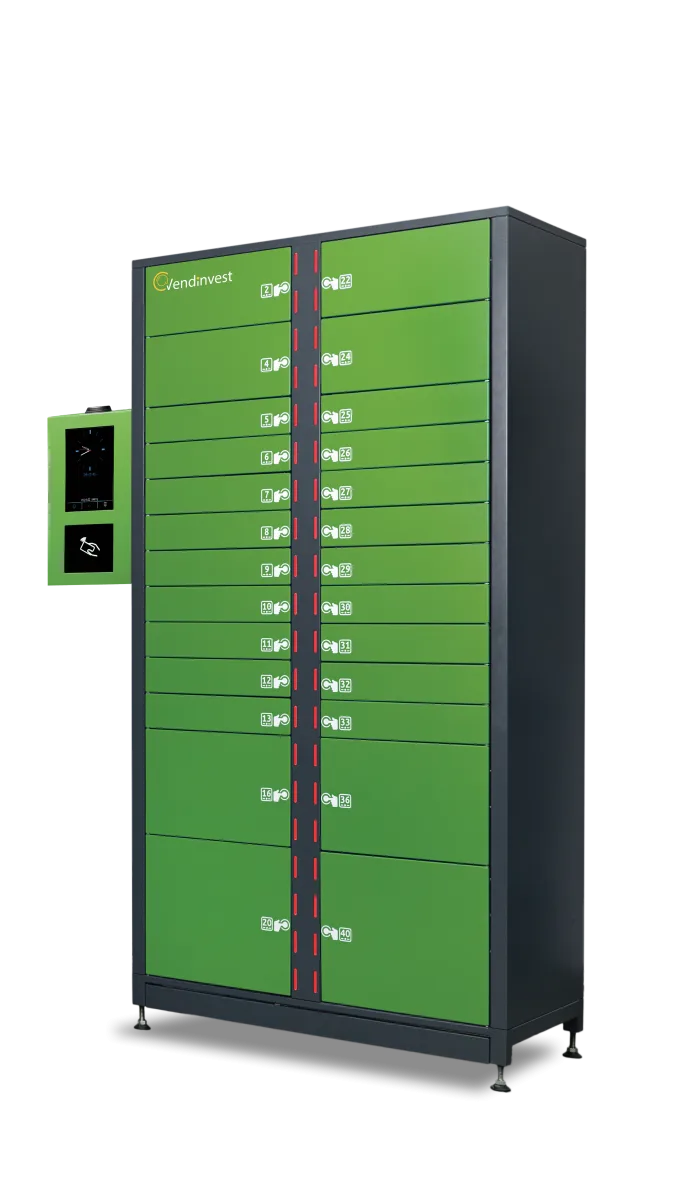 L40Lockable compartments with charging for cordless tools
 SZV 15Larger tools and measuring instruments
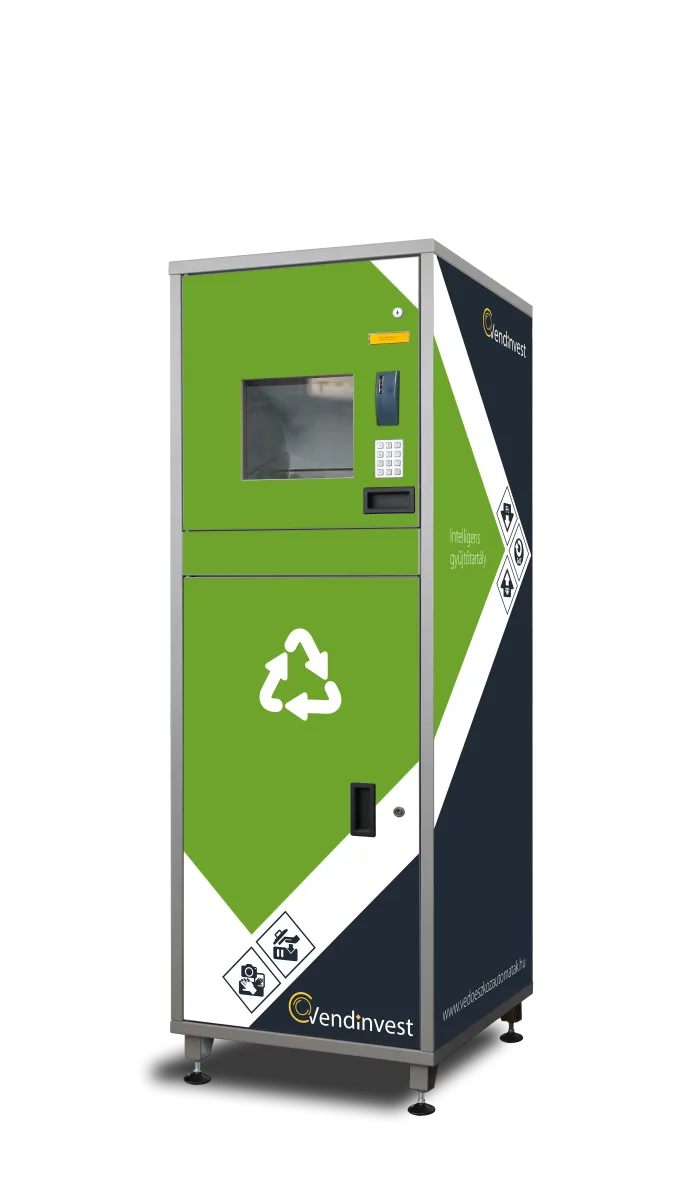 X1 CAMControlled collection of damaged tools for replacement
Where to next
Open a category to see what is in it. The button takes you to its page.
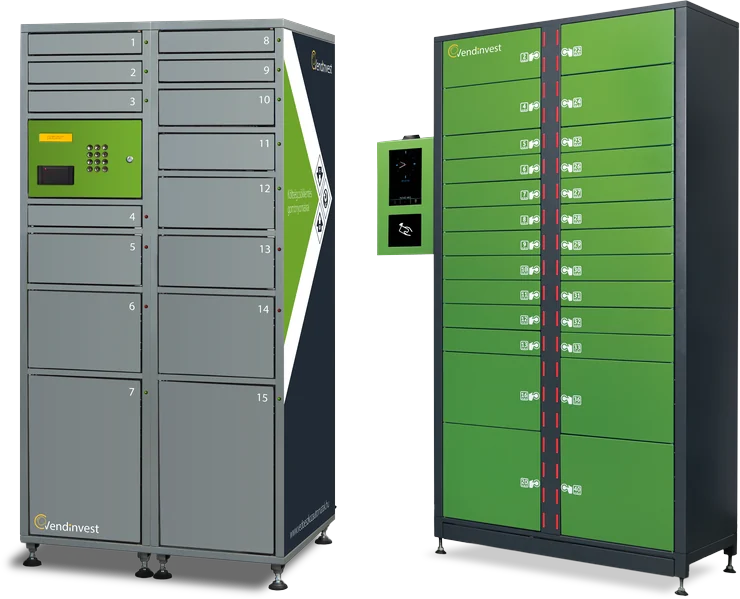
3 models · SZV 15, SZB 18, L40
Large items under lock. The L40 can also charge cordless tools inside the locked cabinet.
Go to the category
2 models · X1 CAM, C240 OEM
Controlled collection with a photographic record. A damaged item does not go back into circulation.
Go to the category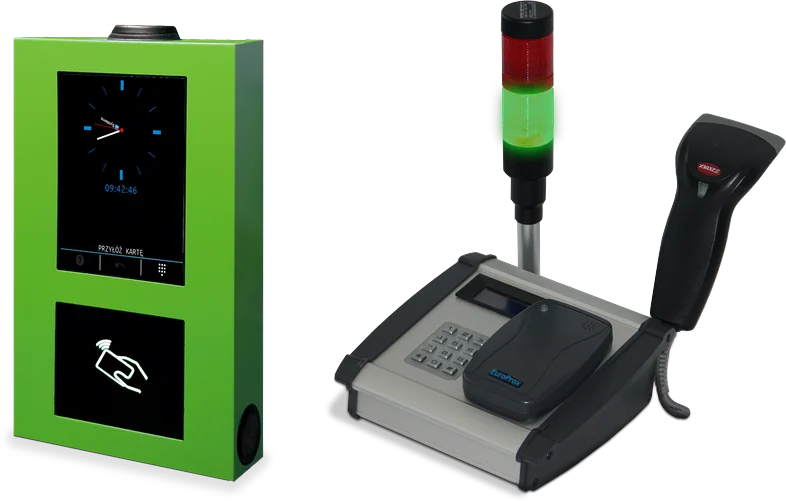
2 models · RKT 2, T10 BASIC
Issuing spread across sites with one overview, for teams that work in several places.
Go to the categoryMore guides
Duties for work equipment and PPE, records of what is issued, and penalties.
Weight limits, racking inspections and records across halls.
The new rules from April 2026, volume limits and zones.
The new act on sales records, the exemption for vending machines and deposit return.
A consultation with no obligation
Tell us how many engineers you have and what gets issued to them and returned. We will propose a set of machines and a way of recording it with a full history.